

Splitting expenses with coworkers: how to keep it drama-free
How to split lunches, happy hours, and group gifts with coworkers without awkwardness. Practical tips for keeping harmony at work.

It was a Friday afternoon. The whole team was heading to happy hour, a bar down the street, cold drinks, some appetizers, good vibes. Then the bill arrived. Someone had ordered three cocktails while others stuck to water. Time to split, and the celebration instantly turned into an awkward silence.
Splitting money with coworkers is different from splitting with friends. With friends, you know everyone’s financial situation, who’s tight on cash and who can pitch in more. At work, you share a space and goals with people across wildly different salary levels, priorities, and spending habits, and you have to sit next to them every day after.
Small financial misalignments can create tension that lingers for weeks. Someone who always feels like they’re paying more. Another person who never gets around to transferring their share. The colleague who “just stops by for one drink” at happy hour but disappears before the bill comes. Over time, these situations erode what should be moments of connection.
The good news: most of this is completely avoidable with a little structure and the right tools.
Why splitting money with coworkers is trickier than with friends
The workplace creates a specific dynamic around money. First, there’s the salary gap: on the same team, you might have someone earning $30,000 a year sitting next to someone earning $120,000. But at happy hour, nobody announces that.
Second, there’s implicit social pressure. Declining a team lunch or a group gift collection for the manager leaving the company can be read as disinterest, aloofness, or even a sign of tension, regardless of what’s actually going on in someone’s bank account.
Third, the fallout sticks around. With a friend, a financial misunderstanding lasts a week. With a coworker, you share a workspace for years. The weight of having to chase a debt, or owing one and feeling the guilt, affects professional relationships in ways completely disproportionate to the dollar amount involved.
That’s why, more than in any other context, splitting work expenses calls for explicit agreements, clear formats, and ideally a system that removes the responsibility from any single person’s hands.
How to split expenses with coworkers without the drama
For daily lunches: agree before anyone orders
The team lunch is the most common scenario, and the most common source of confusion. The classic mistake is leaving “how we’re splitting this” for after everyone has eaten. At that point, splitting equally feels unfair to whoever ordered less, and going individual turns into a complicated math exercise with eight different plates.
The simplest fix: agree on the format before anyone places an order. “Are we splitting evenly today or going separate?”, asking upfront eliminates the calculator-at-the-table scene. If the group already goes out together every week, a standing rule solves it for good.
For regulars, rotating who pays the whole bill also works well: each person covers the full check once and you take turns. Easy to track, and it removes the friction entirely.
For happy hours: what you drink is what you pay
Happy hours have a structural problem: people arrive at different times, order different amounts, and leave at different moments. Splitting the total bill equally is a guaranteed recipe for silent resentment.
For outings with varied consumption, tracking what each person ordered is the fairest path. You don’t need a formal receipt, just note it on your phone as orders come in. Expense-splitting apps were designed exactly for this: you log who ordered what, and the app calculates what each person owes.
If there’s a budget in mind for the evening, agree on a per-person cap before heading out. No surprises on the bill, no awkward moments at the end.
For group gifts and collections: transparency first
A farewell gift for someone leaving the team, a baby shower collection for a colleague on parental leave, a birthday fund for the manager, group gifts are a fixture of most workplaces, and also one of the biggest sources of financial discomfort.
A few practices that consistently work well:
Set the total amount before building the list of contributors. Sharing “we’re putting together a $80 gift” and then letting people opt in prevents anyone from feeling pressured into joining when they’re stretched thin.
Name one person responsible. One person collects, buys the gift, and reports back to the group. When multiple people are handling the money, things get lost or confusing fast.
Keep it voluntary. “Anyone who wants to chip in, just message me” lands better than a sign-up sheet passed around the office. Optional participation removes the pressure for whoever is having a tough month.
When someone doesn’t pay: how to follow up without damaging the relationship
For forgotten debts, a direct and non-accusatory message works: “Hey, just following up on the $20 from last Friday.” Most people genuinely forget, it’s not bad faith. Waiting weeks to mention it and then bringing it up with resentment is worse for the relationship than a quick nudge.
For someone going through a rough financial patch, offer a graceful out: “Want to skip this one?” or “No need to join the collection this time”, said privately, not in front of the group, preserves dignity and the relationship.
The real issue starts when it’s a recurring pattern. At that point, the conversation needs to be more direct, or the group dynamic needs to change: switch to individual billing, set fixed spending caps, or simply stop including that person in future shared expenses.
Use an app and remove the personal awkwardness of tracking who owes what
One reason money friction between coworkers gets so charged is that it relies on memory, manual math, and personal follow-ups, all happening inside a professional relationship.
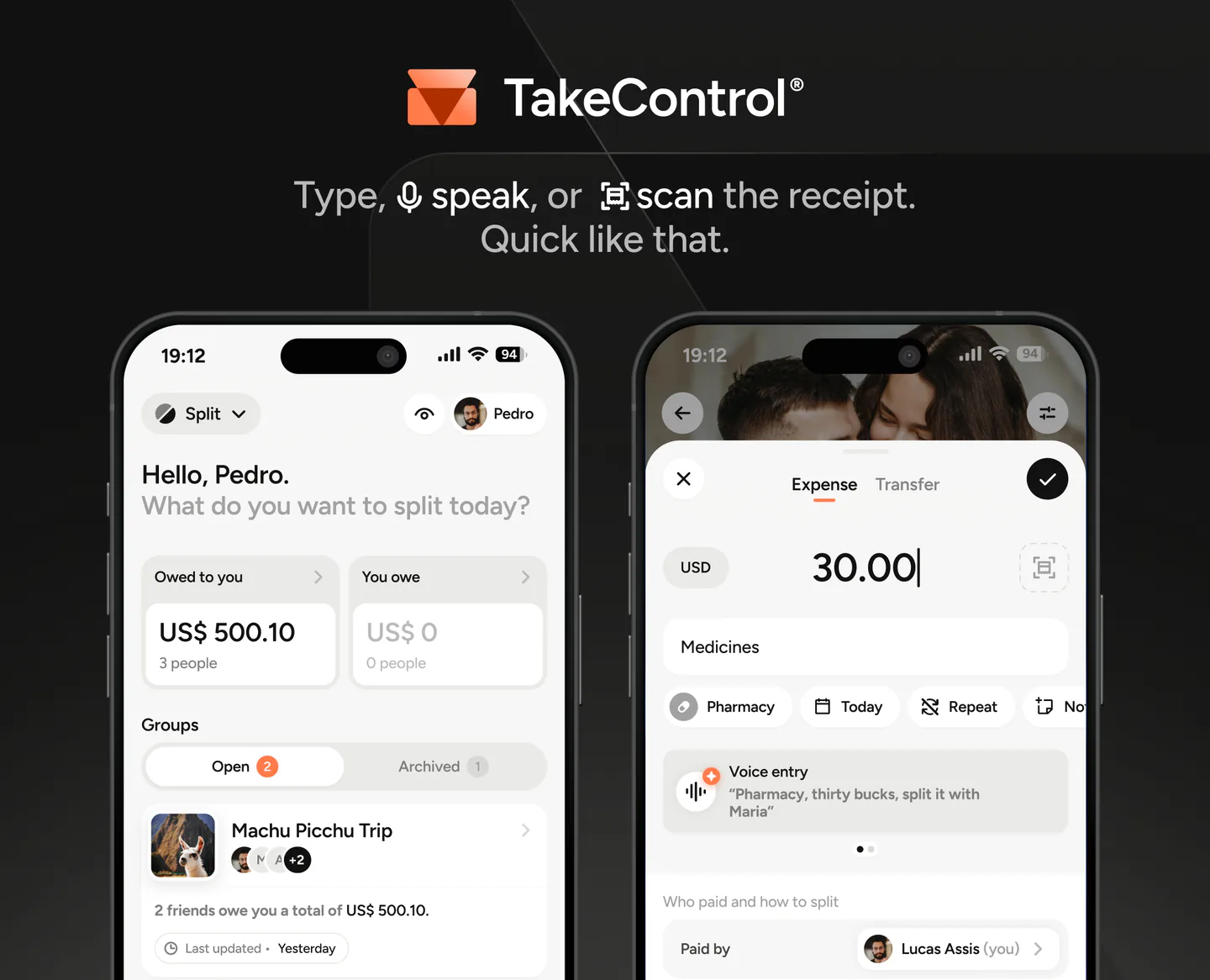
Apps like TakeControl solve exactly this: you create a group, log expenses as they happen, and the app automatically calculates who owes what to whom. Instead of you personally chasing your colleague, the shared transaction history shows what’s outstanding. It removes the personal weight of collections and puts transparency at the center.
For teams that go out regularly, keeping a permanent group in the app means you never have to start from scratch after each outing. The running balance adjusts over time, one person covers lunch today, it gets offset against next week’s happy hour.
A clear agreement upfront saves everyone energy later
Most financial conflicts between coworkers don’t start from bad intentions, they start from the absence of an explicit agreement. Everyone assumes something different about how it’s going to work, and friction appears when those assumptions collide at the bill.
Spending two minutes before any outing to align on the format, equal split, individual, rotating payer, is the lowest-effort investment for keeping the atmosphere easy. Over time, the group builds its own norms and the conversation becomes unnecessary.
Money between coworkers doesn’t have to be a heavy subject. With clear expectations, simple agreements, and the right tools, happy hour stays just that, and Friday lunch loses that uncomfortable silence when the bill arrives.

I created TakeControl to make splitting expenses between couples and on trips simpler. Here, I share tips, app updates, lessons learned, and content to make managing shared expenses easier.
Frequently asked questions
The simplest approach is to agree on the format before anyone orders, split equally, pay individually, or rotate who covers the whole bill. Deciding upfront avoids awkward math and silent resentment at the table.
Start with a direct, non-accusatory message: "Hey, just a reminder about the $15 from Friday." Most people forget, it's rarely bad faith. If the pattern keeps repeating, switch to individual billing instead of splitting after the fact.
Set the total amount before asking who wants to join, name one person to collect and buy, and keep participation voluntary, no pressure. A shared expense app helps track who contributed and keeps everything transparent.
Yes. Apps like TakeControl let you create a group, log shared expenses, and automatically calculate who owes what. This removes the need for personal follow-ups and keeps the whole team on the same page.
Flexible arrangements work best, like "everyone pays for what they ordered" or setting a per-person spending cap at happy hour. This is more inclusive and prevents lower earners from feeling uncomfortable or pressured.
