

Splitting Netflix, Spotify and more: the agreement that actually works
Practical guide to sharing Netflix, Spotify, and streaming subscriptions with friends without payment disputes or awkward reminders.

You pay for Netflix, a friend covers Spotify, another one handles Disney+, and every month you end up sending each other small payments trying to remember who owes what to whom. At first it feels simple. After a few months, it becomes a mess.
Sharing subscriptions is one of the smartest ways to cut everyday costs, but managing the money side is usually where the whole system breaks down. Mismatched due dates, forgotten payments, and nobody wants to be the one who keeps nagging. The result is that someone ends up out of pocket or friendships get strained over a few dollars.
This guide gives you practical strategies for organizing shared subscriptions with friends in a way that actually holds up over time.
The short answer: how to split subscriptions with friends
First, check the service’s current terms to confirm that everyone can join the plan. Then choose one account holder, divide the current price only among eligible participants, set a reimbursement date before billing, and log each month as a recurring expense. Agree on price changes and anyone joining or leaving before the next billing cycle.
| Item | Simple rule |
|---|---|
| Account holder | One person pays the platform and logs the charge |
| Cost per person | Current plan price ÷ eligible participants |
| Reimbursement date | Before the service billing date |
| Price increase | Notify the group and confirm the new amount before renewal |
| Someone joins or leaves | Settle open balances and update the next cycle |
To keep several recurring charges in one place, continue with the guide to splitting group expenses.
Why splitting subscriptions got so complicated
Each platform has its own plans, prices, and sharing criteria, and those rules can change. Before arranging a split, check whether the plan accepts every participant and whether household, family, or location requirements apply.
Netflix, Spotify, Disney+, Prime Video, YouTube Premium, HBO Max, Apple TV+, online courses, cloud storage, design tools. Each one has its own price, its own billing date, and its own rules about sharing. Trying to track all of this in your head or just through a group chat is setting yourself up for failure.
The core problem is not the split itself; it is keeping track of what has been paid, by whom, and when. Without a clear record, small debts pile up and the atmosphere in the group sours before anyone even notices what happened.
How to organize the split without losing your mind
Map out every subscription in the group
Before anything else, take stock of which services the group already shares or wants to share. Write down the total cost of each one, the billing date, and who holds the account.
This sounds obvious, but most groups never actually do it. Once everything is on paper, it becomes clear how much each person saves and how much they need to contribute, and that concrete number makes the conversation a lot easier.
Assign one person per subscription and set a fixed payment date
For each subscription, it works best to have one person be the account holder who pays the monthly bill. Everyone else transfers their share by an agreed date, ideally a day or two before the billing date.
This simple structure prevents the most common problem: the bill coming due before everyone has paid their share, leaving the account holder to cover the difference out of pocket.
Make the payment date a fixed rule for the group, not a request someone has to make every single month. When it becomes routine, people forget far less often.
Use an app to keep the records straight
A spreadsheet works, but it requires someone to update it manually every month. An expense-splitting app handles this more reliably.
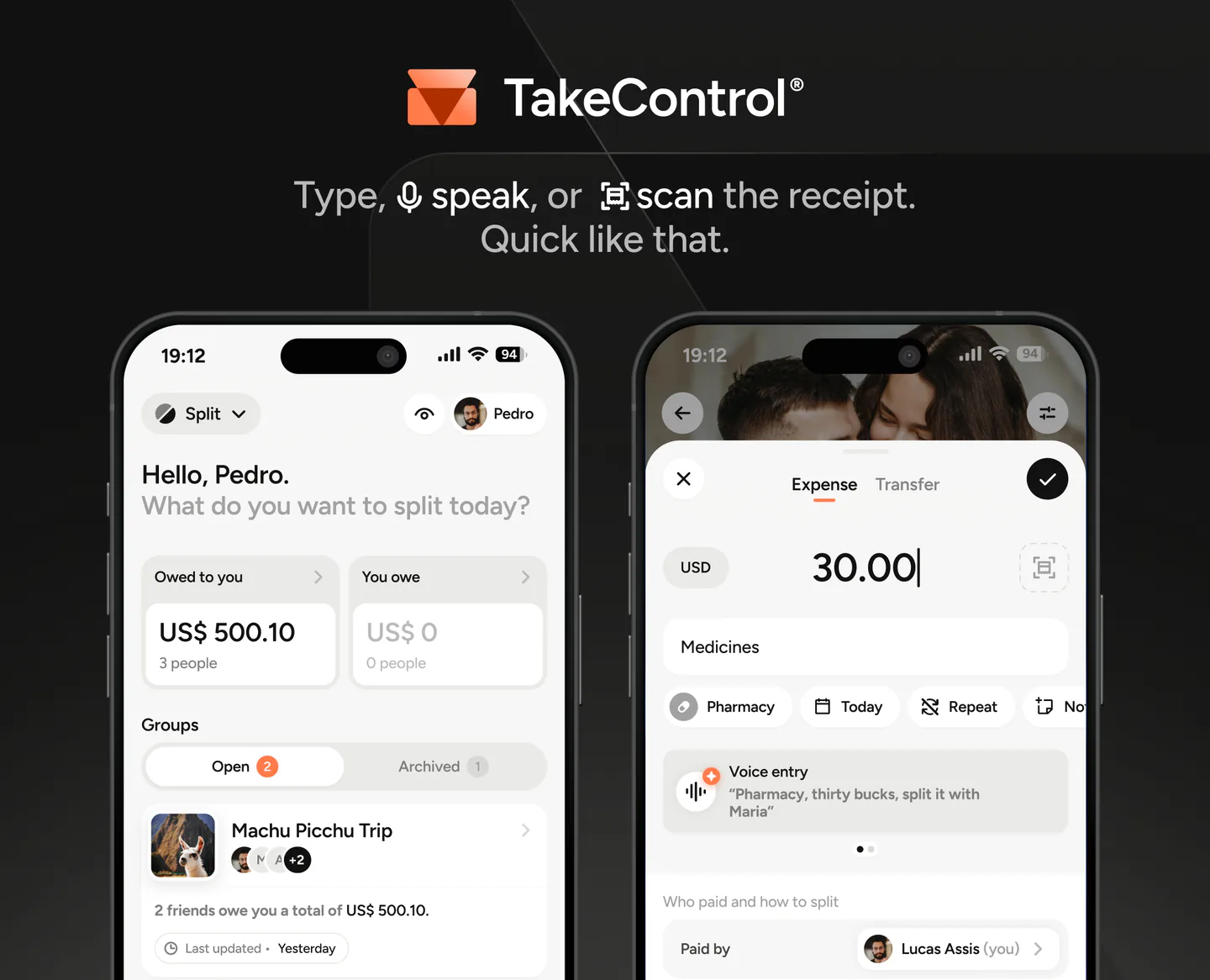
With TakeControl, for example, you create a group with all participants and log each subscription as a recurring expense. The app automatically calculates the running balance for each person. If someone overpaid one month or has been behind for a while, it is all there. When it is time to settle up, there is no room for dispute about the numbers.
The payment history is also invaluable if a disagreement ever comes up. Instead of relying on anyone’s memory, you have the full record available to everyone in the group.
Agree on the rules before you start
It might feel overly formal to set ground rules for a group of friends, but preventing a problem is always easier than resolving a conflict later. A few things worth agreeing on up front:
What happens when someone wants to leave. How much notice do they give? Who takes over their spot?
How price increases are handled. If the service raises its price, does everyone automatically split the new amount, or does the group need to discuss it first?
What happens if someone does not pay on time. Is there a grace period? Does access get paused?
You do not need a formal contract. A clear conversation pinned in the group chat is usually enough to prevent most problems before they start.
Keep subscription costs separate from other group spending
This is a common mistake. The same group that manages subscriptions also pools money for a birthday dinner, weekend outings, or a group gift. The expenses get tangled and no one can figure out what they owe for what.
When possible, create separate groups in your expense app: one for subscriptions and one for one-time spending. It keeps the records clean and makes it easy to see what is actually outstanding at any given moment.
What to do when the group grows or changes
Groups shift over time. Someone leaves, someone joins, a service raises its price, or a platform shuts down. Having a clear process for these moments saves a lot of headaches.
When someone joins mid-month, calculate a prorated amount for the days they actually used the service. When someone leaves, make sure all outstanding balances are settled before removing them from the account. Logging these changes in the app keeps the history accurate for everyone.
If the group decides to cancel a subscription altogether, make sure all debts are cleared before closing things out. It sounds like a small detail, but unresolved balances are one of the most common sources of friction between friends.
Why it is worth the effort to stay organized
Run the calculation with current numbers: cost per person = current plan price ÷ eligible participants. Compare that result with an individual plan and account for fees, limits, and usage rules. Because plans and prices change, revisit the comparison after every price adjustment.
The financial organization is what makes the whole model sustainable. When everyone knows exactly what they owe and when to pay it, the system runs itself without anyone needing to chase anyone down.
Conclusion
Sharing subscriptions with friends is one of the easiest ways to reduce spending without changing your lifestyle at all. The problem is almost never the split itself; it is the lack of tracking over time.
Mapping out your subscriptions, assigning a responsible person for each one, setting fixed payment dates, and using an app to log everything are the steps that turn a chaotic arrangement into something that works smoothly for months and years.
With the right tools and clear agreements in place, splitting subscriptions with friends stops being a source of stress and becomes just another smart way to enjoy what you already love, for less.

I created TakeControl to make splitting expenses between couples and on trips simpler. Here, I share tips, app updates, lessons learned, and content to make managing shared expenses easier.
Frequently asked questions
The simplest approach is for one person to pay the bill and the others to reimburse them each month. Using an expense-splitting app like TakeControl keeps track of who paid and who still owes, removing all the guesswork.
It depends on the plan, country, and the service's household or family rules. Check the platform's current terms and include only people who meet the plan requirements.
Set a fixed payment date for the group and use an expense app to send reminders automatically. Having a clear payment history on record makes the conversation easier and avoids awkwardness between friends.
Create a group in TakeControl with all participants and log each subscription as a recurring expense. The app automatically calculates each person's balance, keeping everything in one place.
It depends on the current price, the number of eligible participants, and the plan rules. Divide the current price by the number of participants and compare it with an individual plan; savings only exist when everyone is eligible and pays on time.
