

How to split family vacation expenses fairly
Learn how to split lodging, transport, meals, and activities on a family vacation with clear rules everyone agrees on before the trip.

The family group chat lights up: “let’s all go on vacation together this year!” Within minutes, everyone is in. Parents, kids, aunts, uncles, cousins, grandparents. The destination gets picked, the dates get pinned, and the wishlist grows with every message.
Then someone asks: “so how are we splitting the costs?”
Family vacations have the potential to create memories that last a lifetime. But when the financial side is not planned in advance, a beautiful trip can turn into a series of awkward conversations and resentments that linger long after everyone gets home. It happens more often than most families admit.
The good news is that the fix is not complicated. It just requires an honest conversation before the trip and a simple system for tracking shared expenses.
What is the best way to split family vacation expenses?
Separate each type of expense before choosing the method. One rule for the entire trip is usually less clear than agreeing on a split for each category.
| Expense | Practical method |
|---|---|
| Lodging | By room, bed, or family unit, based on the booking |
| Transport and tickets | Among the people using the service or joining the activity |
| Groceries and shared meals | Among those consuming them, with exceptions agreed in advance |
| Shopping and optional activities | Each person or family unit pays their own cost |
If the group also has very different spending limits, see how to travel with friends on different budgets.
What goes wrong when nobody talks about money first
When a group arrives at the destination without having discussed how expenses will work, a few predictable problems surface.
One person fronts everything and struggles to get paid back. Whoever has the most available credit or cash ends up covering the hotel, meals, and activities. Then comes the awkward process of chasing everyone down afterward. The same person tends to end up in this role every trip, and the frustration builds over time.
Equal splits feel unfair to some people. If the group includes people with very different incomes, or families with young children, splitting costs equally can create real tension. Lower earners feel the financial strain; parents of toddlers question why their two-year-old counts the same as an adult.
Untracked extras add up. A boat tour here, a special dinner there, a souvenir on the way out. Without a running log, nobody knows the real total by the end of the trip. Memories of who paid what start to differ, and disagreements follow.
Different spending habits collide. One couple wants the nice restaurant; another is happy with street food. One person drinks; another does not. Without an agreement upfront, every spending decision becomes a potential conflict.
None of this means the family is difficult. It is the natural result of skipping the financial conversation before departure.
How to organize family vacation expenses without the stress
Have the money conversation before anything is booked
The most important step happens weeks before the trip. Get the adults together, whether in person or on a video call, and cover the basics:
- What is the realistic budget for each family unit?
- Which expenses will be shared, and which will be individual?
- How will costs involving young children be handled?
- Will there be a shared kitty, or will everyone pay and settle up at the end?
- What happens if someone needs to cancel or scale back?
This conversation feels slightly awkward to start, but it prevents far more uncomfortable situations later. A natural way to open it: “before we lock anything in, I want to make sure everyone is comfortable with the expected costs.”
If there are significant income differences in the group, this is also the right moment to address them, without anyone having to bring it up mid-trip.
Agree on a splitting method that fits the group
There is no single correct formula. The key is choosing a method everyone finds fair, and agreeing to it before the trip.
Equal split by family unit. Each family pays the same share regardless of how many people are in their unit. Simple and easy to calculate, but it can feel uneven when family sizes vary significantly.
Per-person split, with a specific rule for children. The group can adjust participation by expense type: lodging may follow rooms or beds, transport may depend on seats, and meals can reflect who actually consumes them. Record the chosen rule instead of applying one arbitrary share to the whole trip.
Proportional to income. More appropriate when income differences within the group are significant. Each person contributes a percentage of their earnings rather than a fixed amount. It is the most financially equitable method, but requires more openness about personal finances.
Any of these models works. What matters is that it is agreed upon before arrival, not negotiated at the check-in desk.
Separate shared expenses from personal ones
Categorizing expenses in advance removes most of the in-trip arguments.
Shared expenses (split by everyone):
- Accommodation
- Group transportation (rental car, fuel, tolls, airport transfers)
- Planned group meals
- Activities everyone participates in
- Groceries for a shared house, cabin, or rental
Personal expenses (each person covers their own):
- Individual meals or snacks eaten separately
- Activities or excursions that not everyone joins
- Alcoholic drinks, if some members of the group do not drink
- Personal purchases like toiletries, clothing, or pharmacy items
Being clear about these categories upfront prevents the frustration of being asked to share costs for something you did not consume or choose.
Set up a shared kitty for group spending
One of the most effective logistics strategies: at the start of the trip, each adult (or each family unit) contributes a set amount to a shared fund. This fund covers collective expenses throughout the vacation, so no single person is constantly fronting the bill.
How to manage it:
- Designate one person to hold and log the fund’s outflows
- Agree on a top-up rule when the balance drops below a certain level
- Keep a record of every transaction, however small it seems
If money is left over at the end, divide it back. If it runs short, do a quick top-up. With good record-keeping, the status of the fund is always clear.
A practical starting point: estimate the total expected shared expenses, divide by the number of contributing shares, then add a 10% buffer for unexpected costs.
Track every expense in real time with an app
Keeping records in a WhatsApp chat or on paper tends to create gaps and errors. A dedicated expense-splitting app handles the tracking cleanly.
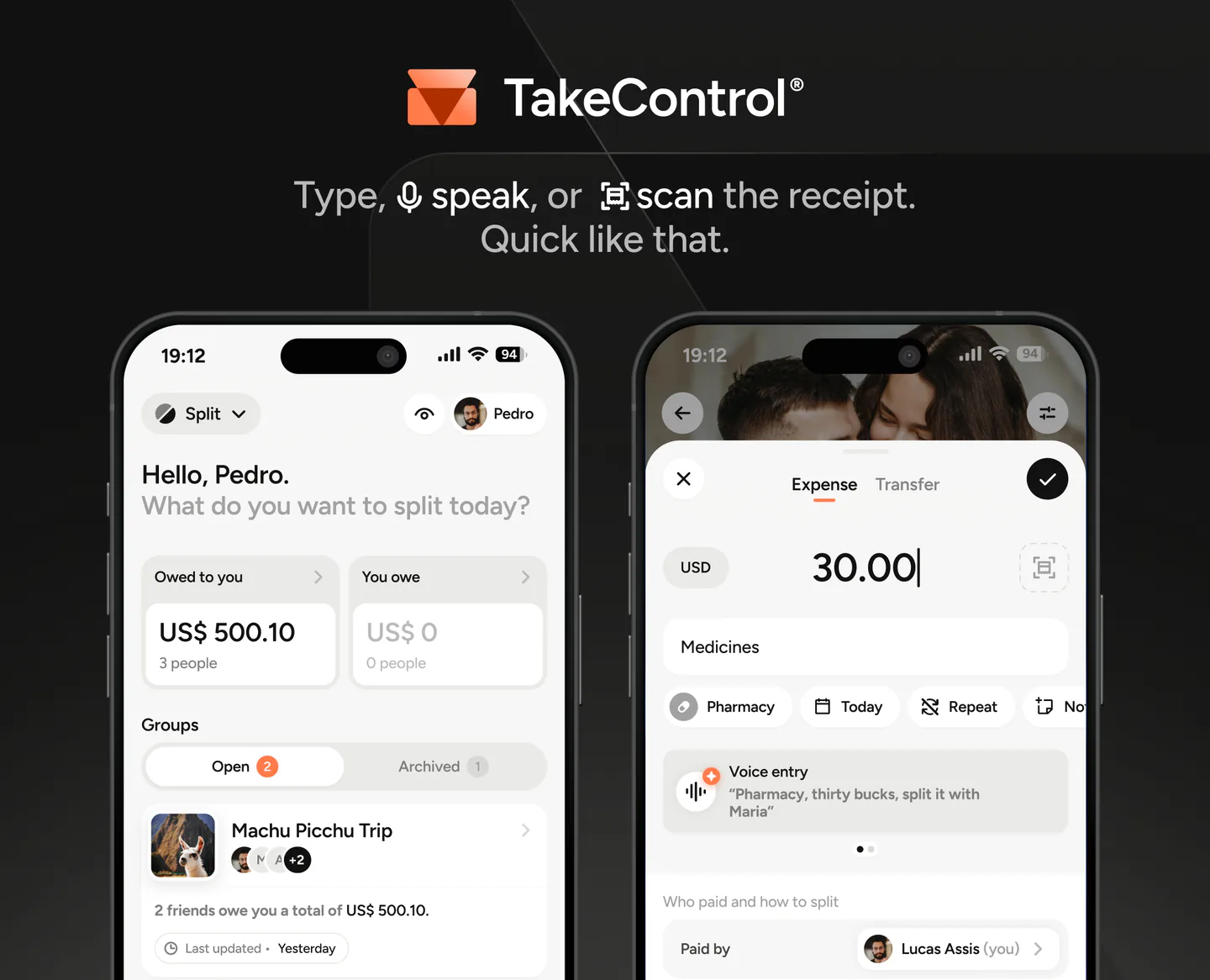
TakeControl, available for iOS and Android, lets you create a group for the trip and log expenses as they happen. The app automatically calculates who is owed what and who owes what, updating in real time. No mental math, no spreadsheets, no end-of-trip surprises.
Download TakeControl for free and organize the expenses for your next trip.
 Download for iPhone
 Download for Android
Logging expenses as they occur also gives the group ongoing visibility into how spending is tracking. That shared awareness naturally helps everyone make more considered decisions about discretionary extras.
Settle up before you fly home
A simple rule that too many groups skip: agree that the financial reconciliation happens on the last day of the trip, not after everyone is back in their routines.
Once home, daily life resumes, days pass, and following up about money becomes increasingly awkward. Doing the final settlement while everyone is still together makes it quick and easy. If transfers are needed afterward, set a clear deadline, seven days after returning is a reasonable standard. Naming that deadline in advance prevents the balance from sitting open for months.
The financial part should be invisible by the end
Family vacations are at their best when nobody is stressed about who owes what. The planning that makes that possible takes one good conversation and a simple system.
Set the splitting method, separate shared from personal expenses, create a kitty, use an app to track spending, and agree to settle before you leave. With those pieces in place, the trip gets to be about the people and the moments, not the receipts.

I created TakeControl to make splitting expenses between couples and on trips simpler. Here, I share tips, app updates, lessons learned, and content to make managing shared expenses easier.
Frequently asked questions
Choose a rule tied to actual use: by room occupied, by person, or by family unit. Children may have a different share of meals, while transport and tickets often depend on a seat or admission. Agree on the method before booking.
A shared kitty works best for longer trips or larger groups — it prevents one person from fronting everything and waiting to be paid back. Paying and settling later is simpler for small groups and short trips, as long as everyone logs expenses in real time.
A proportional split works best here: each person contributes a percentage of their income rather than a fixed amount. It requires an open conversation beforehand, but it removes the discomfort of someone stretching their budget just to keep up.
Yes. Apps like TakeControl let you create a group for the trip, log each expense as it happens, and automatically calculate who owes what. Everyone can see the running balance throughout the vacation, so there are no surprises at the end.
Ideally, before you leave. Settling on the last day, while everyone is still together and the context is fresh, is much easier than chasing people down once everyone is back in their routines. If that is not possible, agree on a deadline of no more than one week after returning home.
