

Carpool costs: how to split gas for the commute
Learn how to calculate and split gas, tolls, and parking for a work carpool, including the driver and the days each person rides.

The “Carpool crew” group chat has been quiet for three weeks, but everyone knows exactly what it’s for: eventually someone is going to ask “hey, how much do I owe for this month?” and nobody will actually know the answer. The driver vaguely remembers filling up the tank three or four times, one passenger swears they already sent a payment, another genuinely can’t remember. What started as a favor between coworkers has quietly turned into a source of low-grade tension.
This scene plays out in pretty much every group that shares a car to get to work. It’s practical, it saves everyone money, and it even cuts down on traffic, but the financial arrangement is almost never spelled out clearly from the start. And it’s exactly that lack of clarity, not the carpool itself, that wears down the relationship between coworkers and neighbors over time.
How to calculate gas money for a carpool
Use the actual costs for the period: add the fuel used for shared rides, agreed tolls, and parking. Then divide the total by the number of people who used the carpool, including the driver.
cost per person = (fuel + tolls + parking) ÷ participants
Track the days each person rides as well. For a regular group, the guide to splitting group expenses without stress can help keep the monthly balance transparent.
Why splitting commute costs is different from splitting a dinner bill
Splitting a dinner bill is simple: everyone’s at the table, the amount is one lump sum, payment happens on the spot. A work carpool is a different kind of problem, because it’s a recurring, daily expense with one person fronting the cost every time (the driver) and several beneficiaries who are supposed to pay their share back later.
That setup creates three points of friction that a one-off split doesn’t have. First, the per-ride amount is too small to collect on the spot, so it tends to pile up; nobody wants to send a payment for two dollars every single day. Second, fuel cost varies (traffic, gas prices, the AC running), so “how much it costs” is never a fixed, obvious number. Third, no-shows, holidays, and work-from-home days mess with the math: should someone who skipped a day pay the same as everyone else?
Without a clear agreement, the driver usually loses the most, since they’re the one absorbing the wear on the car, the time spent driving, and the money leaving their pocket first. Passengers, even with good intentions, tend to lose track of how much they’ve already paid, which creates that nagging feeling of “wait, do I owe something here?”
How to organize a carpool split without the awkwardness
The good news is this problem has a simple fix, as long as the group agrees on the rules upfront instead of hashing it out in the middle of an argument about who “always forgets to pay.”
Calculate a flat rate per ride, not per fill-up
Instead of splitting the cost of each individual fill-up (which varies and is hard to track), work out an average cost per ride. Take the distance of the commute, divide by the car’s average fuel economy, multiply by the current price per gallon, add tolls and parking if applicable, then divide by the number of people in the car, including the driver. Round it to a clean number. A flat per-ride rate is far easier to remember and collect than recalculating everything every time someone fills the tank.
The driver should be part of the split too
A common mistake is exempting the driver from the split, as if driving alone were their contribution. That feels fair at first, but in practice it leaves the driver covering a bigger share of a cost that benefits everyone equally. The more balanced approach is for the driver to also “pay” their own share, and simply collect everyone else’s share back. That way the financial weight of the trip is genuinely shared, not just the work of driving.
Settle up once a month, not after every ride
Collecting two or three dollars a day is inconvenient and easy to forget. What works better in practice is logging every ride throughout the month and settling the full amount at once, at the end of the period. That cuts down on the number of transfers, makes it easier for everyone to keep track, and turns a potential daily annoyance into a single, painless settle-up.
Agree on what happens with no-shows and holidays
Set a simple rule from the start: anyone who cancels with enough notice (the night before, say) is excluded from that day’s split; anyone who cancels without notice still owes their share, since the car makes the trip either way, with or without that passenger. Holidays and remote work days simply don’t count toward the calculation, since the trip never happens. A clear rule keeps “oops, forgot to give a heads-up” from becoming a recurring excuse.
Log every ride so nobody has to rely on memory
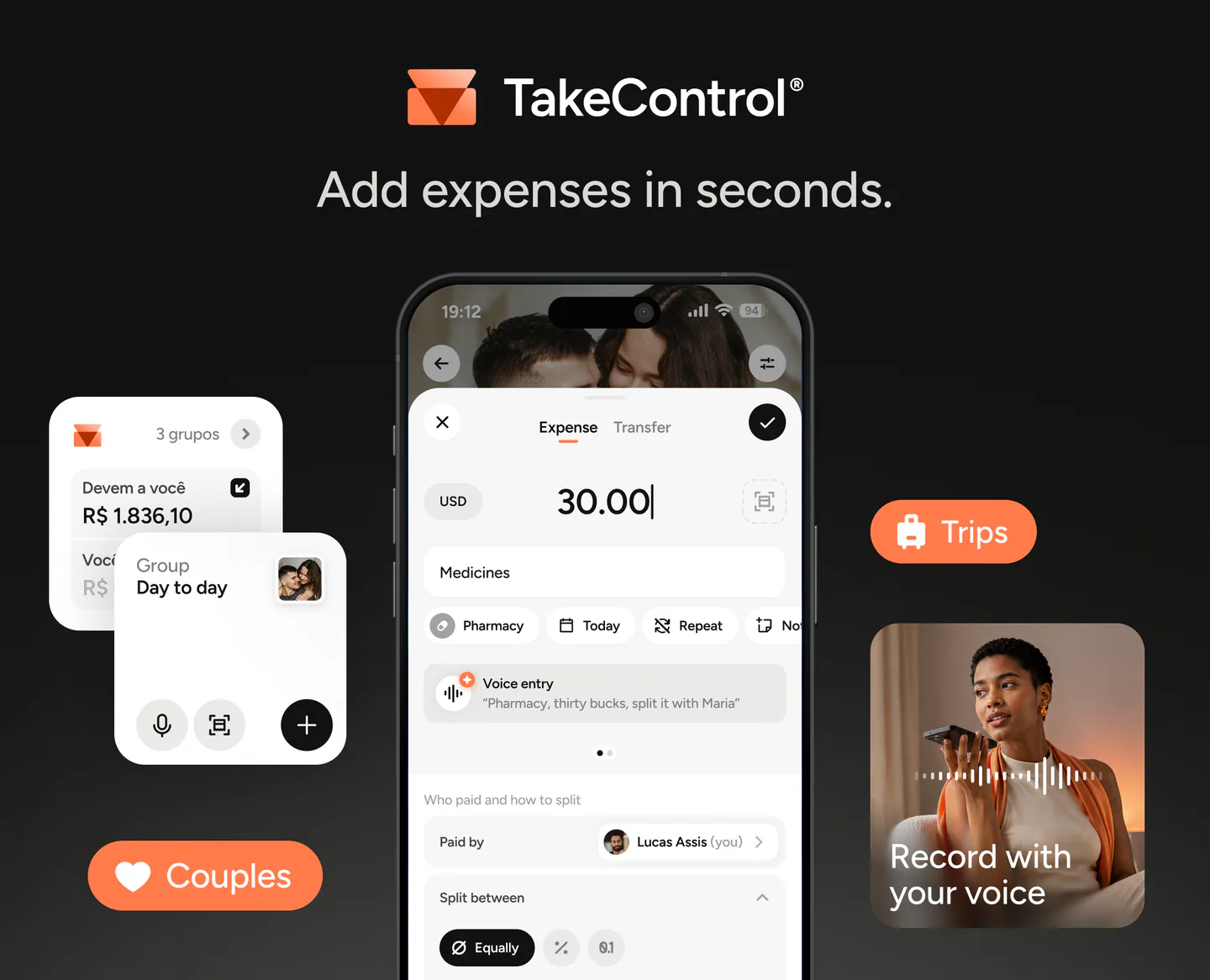
The biggest source of friction in a work carpool isn’t the amount itself, it’s the uncertainty. “I think I already paid,” “I think I owe something,” “I don’t remember if I rode this week” are the kind of phrases that show up when there’s no reliable record. An app like TakeControl handles this simply: each person logs rides and payments, the app adds everything up automatically, and shows the balance between everyone in the group, no spreadsheet or mental math required at the end of the month.
What to avoid with a shared commute
A few habits seem harmless at first but are exactly what turns a practical carpool into a source of stress.
Putting off settling up “for whenever.” The longer it goes without a settle-up, the harder it gets to remember who paid what, and the more likely someone ends up losing money without even realizing it.
Not agreeing on the rules before the first ride. Nailing down the rate, the payment method, and what happens with no-shows before day one avoids having those conversations later, once there’s already some tension in the air.
Confusing carpooling with a paid transportation service. Splitting the actual cost of a shared commute among coworkers is a normal, informal arrangement; it becomes a different situation only if it turns into a fixed, per-seat charge run like a business. Keeping the agreement framed as cost-sharing, not as “the price of the ride,” keeps things simple and above board.
Switching drivers without recalculating anything. If the group rotates who drives, fuel economy and wear vary from car to car. It’s worth adjusting the split when the vehicle changes instead of keeping a flat number that only made sense for the previous car.
When it’s worth putting the agreement in writing
In small groups of two or three people who know each other well, a verbal agreement is usually enough. But as the group grows, or when the car starts picking up people from different departments who don’t know each other that well, it’s worth writing the rules down, even if it’s just a pinned message at the top of the group chat: rate per ride, payment method, monthly settle-up deadline, and what happens with no-shows. That way, every new person who joins the carpool doesn’t have to learn the rules the hard way, by asking around or, worse, finding out later they did something wrong.
It’s also worth revisiting the agreed rate every so often. Gas prices change, the route might shift if someone moves, and a rate that made sense six months ago could be outdated today. A quick check-in every quarter, or whenever fuel prices move significantly, keeps the split fair without anyone having to be the first to complain.
The agreement matters more than the car
At the end of the day, what makes a shared commute last for months, or even years, without wearing down the relationship between coworkers isn’t the car or the route, it’s the financial agreement behind it. A group that sets clear rules, logs every ride, and settles up predictably gets to enjoy every benefit of carpooling, savings, less traffic, more time to catch up, without money turning into an awkward topic every Friday. It takes less than ten minutes of conversation to avoid months of “wait, how much do I actually owe you?”

I created TakeControl to make splitting expenses between couples and on trips simpler. Here, I share tips, app updates, lessons learned, and content to make managing shared expenses easier.
Frequently asked questions
Add up the fuel cost of the trip (miles driven divided by the car's fuel economy, multiplied by the price per gallon) plus tolls and parking if any, then divide by the number of people in the car, including the driver. Rounding to a flat rate per ride makes settling up at the end of the month much easier.
The fairest approach is yes. The driver is included in the split like any other passenger, since they're heading to the same place too; the difference is they collect everyone else's share, not that they're exempt from paying.
Include costs directly tied to the shared commute and accepted by the group, such as fuel, tolls, and parking. Explain and agree on any additional amount beforehand so the split does not feel arbitrary.
Set the rule upfront: anyone who cancels without enough notice (say, by the night before) still owes their share for that day, since the trip cost doesn't change with one less passenger. That discourages last-minute no-shows and keeps the driver from losing money.
Yes, especially when the same group carpools every workday. An app like TakeControl logs every paid ride, adds up the month's total, and shows the running balance between everyone automatically, no spreadsheet or awkward reminder texts needed.
