

Surprise party: how to split the bill without giving away the secret
A surprise party has an extra challenge: collecting money without tipping off the guest of honor. Here's how to budget, collect, and settle up without blowing it.

The group chat “Maya’s SURPRISE 40th 🤫” already has 18 people, three date polls, and a shopping list nobody’s reviewed. Everything’s on track, until someone types “drop your Venmo here” in the wrong thread, the one Maya is actually in. Or worse: she sees the notification pop up on her partner’s phone, “Payment received: Maya’s Party, $25,” and spends the next two weeks pretending she didn’t see anything.
Throwing a surprise party is already an exercise in quiet logistics. Coordinating dates, picking a venue, deciding who’s covering for who with a fake excuse. But there’s an extra layer almost nobody plans for carefully: how to collect money from a big group without leaving a single trace. Unlike a regular group chip-in, you can’t just drop a payment link in the main chat and wait for the money to roll in. Every message, every notification, every carelessly worded reminder can blow the surprise before the big day.
The problem: money leaves a trail, and a secret can’t have one
Collecting contributions from a group is already a hassle under normal circumstances. Someone forgets, someone says “sending it today” and doesn’t, someone asks “wait, how much again?” for the fifth time. With a surprise party, that whole process gets riskier, because every step of the collection is also a step where the secret could slip.
The first risk is the group chat itself. The bigger the group, the higher the odds someone adds the wrong person or replies in a one-on-one thread instead of the group. The second risk is the payment notification. Apps like Venmo, Zelle, or PayPal usually show a memo line right on the lock screen, and if the guest of honor shares a device, a family plan, or just glances at a partner’s phone at the wrong moment, the party name can surface at exactly the worst time. The third risk is time itself: a collection that drags on for weeks means more people know, more messages are floating around, and more chances for someone to slip up.
Add to that the usual headache of any group event, nailing down the right budget, deciding who owes what, and settling up afterward, and it’s easy to see why so many surprise parties turn into a more stressful behind-the-scenes production than the party itself.
How to run the surprise party fund without blowing the secret
The fix isn’t complicated logistics, it’s layering a bit of discretion onto the same collection process you’d use for any group chip-in.
Put someone outside the inner circle in charge
Before opening the collection, pick one person to centralize payments, ideally someone who doesn’t live with, work near, or share finances with the guest of honor. That alone drastically cuts the odds of a notification surfacing at the wrong moment, whether on a shared screen or in an overheard conversation.
That person collects the money, tracks who’s paid, and becomes the single point of contact for questions. Having one clear owner also stops multiple people from sending scattered messages trying to confirm amounts, which only increases how exposed the group is.
Lock in the budget and a code name before you ask for a cent
Settle on the per-person amount before sending the first request. A clear number, like “$25 each covers food, drinks, and decorations,” avoids the back-and-forth that drags the process out and raises the odds of a slip.
Agree on a code name for the event too, something neutral with no obvious link to a party or birthday. “July split,” “Friday thing,” or even a made-up project name all work fine. Use that code name in every payment memo, message, and reminder, since that’s exactly the kind of text that shows up in lock-screen notifications.
Ask for payment with a short deadline and clear instructions
Instead of leaving the collection open for weeks, set a window of three to five days. Shorter windows cut down how long the group is exposed and keep the information from circulating longer than it needs to.
When asking for the money, be specific about where it goes and what to write: “Send to [organizer’s handle], memo ‘July split,’ by Thursday.” The less someone has to think or improvise, the lower the odds of a slip in the payment note.
Track everything in an app instead of relying on scattered messages
Manually keeping tabs on who’s paid, who hasn’t, and how much has come in is where most mistakes happen, and in this context a mistake can mean a message landing in the wrong chat. An expense-splitting app fixes that without leaving anything visible to someone who isn’t supposed to see it.
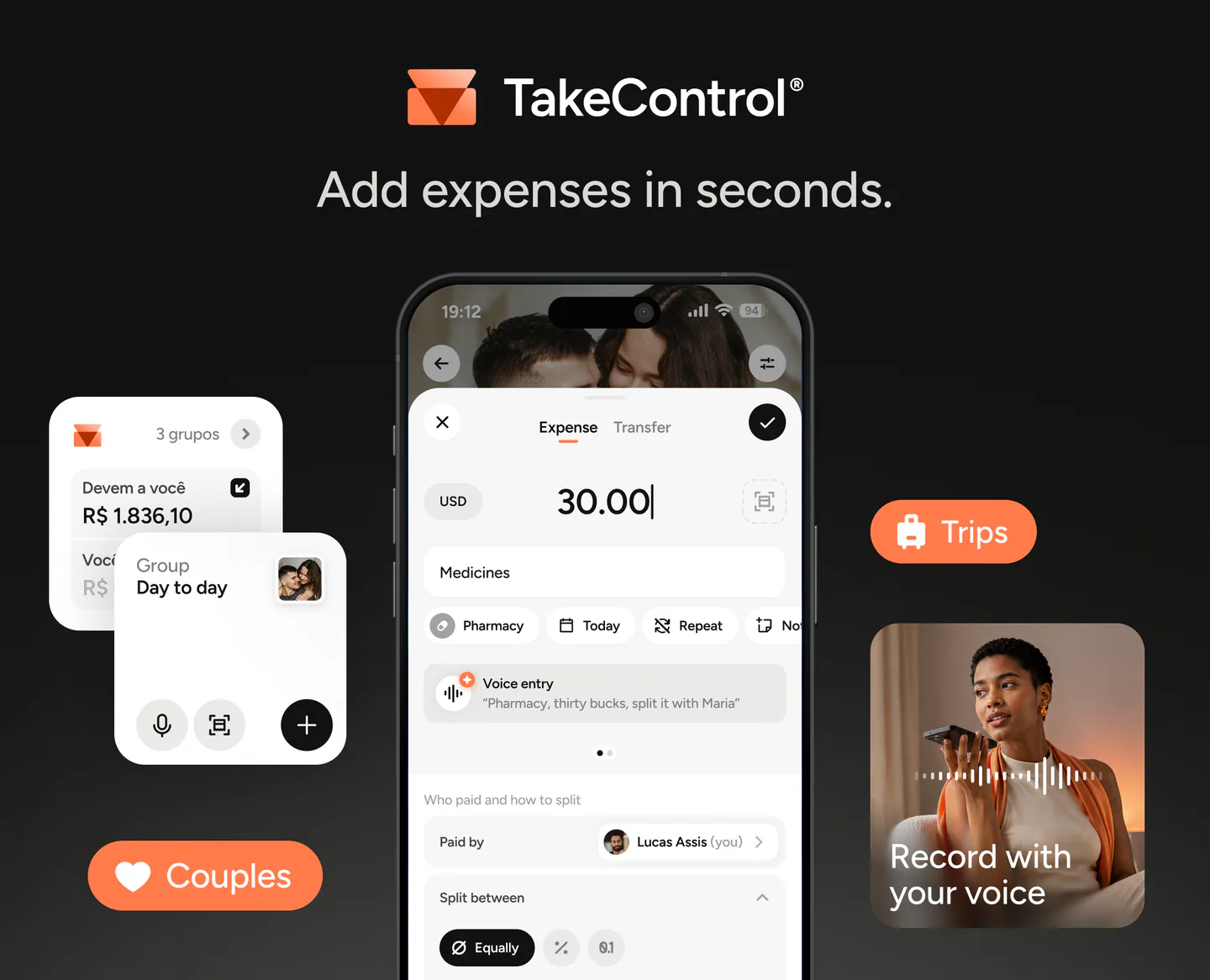
With TakeControl, the organizer creates a group under a discreet name, adds the total amount for the event, and each person confirms their contribution right in the app, no need to type anything in the group chat. The app shows in real time who’s paid and how much is still outstanding, and notifications stay inside the app itself instead of showing up on a lock screen. That removes an entire category of risk and keeps the organizer from turning into an impromptu bookkeeper trying to remember who sent what.
Handle stragglers without making noise
Even with a clear deadline, someone always runs late. In this case, skip the group chat, the risk of the wrong message slipping through is too high. Send a direct, one-on-one reminder from the organizer to whoever still owes.
Worth noting: in a surprise party, pushing too hard is its own risk. A reminder sent over and over through the same channel draws attention, especially if the person who owes money keeps their phone near people close to the guest of honor. Two low-key nudges are usually enough; after that, the organizer moves forward with planning and sorts out the balance calmly, after the party.
If the deadline passes and a few people still haven’t paid, the group has two options: those who already contributed cover the gap and settle up later, or the budget gets trimmed to fit whatever’s actually been collected. The second option usually causes less friction in the long run, and nobody ends up out of pocket because someone else was slow to pay.
After the party: close the books with the group
Once the surprise has landed and the party’s happened, it’s time to settle up with the group. The organizer should share how much came in, how much was spent, and what’s left over, if anything.
That closing step doesn’t need to be formal, but it does need to happen. It confirms exactly where the money went and builds the trust that makes everyone happy to chip in again for the next surprise party, because there’s always a next one.
If there’s money left over, split it back proportionally or set it aside for the group’s next event, as long as everyone agrees. If there’s a shortfall, the organizer flags the gap and how it’ll get covered, so nobody’s left wondering how the fund actually shook out.
Conclusion
A surprise party demands an extra layer of care that most groups only discover the hard way, usually after a close call. With a clear organizer outside the inner circle, a locked-in budget under a discreet code name, short deadlines, and an app tracking everything without leaving a visible trail, the money side stops being the weak link in the plan. The secret holds until the right moment, and everyone shows up thinking about just one thing: the look on the guest of honor’s face.

I created TakeControl to make splitting expenses between couples and on trips simpler. Here, I share tips, app updates, lessons learned, and content to make managing shared expenses easier.
Frequently asked questions
Use a neutral payment note like "group thing" or "July split," never the party or the birthday person's name. Set a short collection window too, so a bank notification doesn't sit on someone's lock screen for days.
Pick someone who doesn't live with, work near, or share accounts with the guest of honor, since that cuts the risk of a payment notification popping up on a shared screen. It also helps to choose someone organized, since they'll be tracking amounts, deadlines, and who still owes.
It depends a lot on the format, but a simple at-home party with food, drinks, and basic decorations usually runs $15 to $30 per guest. Locking in the budget before you open the collection avoids last-minute asks, which are exactly the kind of thing that raises suspicion.
Avoid sending money through a contact-linked payment method the guest of honor might see, and route everything to an account they don't monitor, like the organizer's. If the group uses an expense-splitting app, name the event something discreet and turn off notifications that could show up on a locked screen.
Suggest a target amount, but make it clear that smaller contributions are welcome. What matters is closing the budget around whatever gets collected, adjusting the menu or decorations to match the total instead of pressuring anyone who's tight on cash that month.
