

Studying abroad: how to split costs with roommates you just met
Living with strangers from different countries while studying abroad can get messy fast. Here is how to set the money rules before problems start.

You walk into the apartment you will share for the next six months and meet, in person, the three people you will be living with. One is from Colombia, another from South Korea, another from a small town in Portugal. Nobody shares a first language, nobody knows yet if the others do the dishes right away or let them pile up, let alone whether they will pay their share of the gas bill on time. By day two, someone has already bought toilet paper for the whole apartment. By the first week, there has been a night out to explore the city, and nobody quite remembers who paid for what.
That is the reality for almost everyone who studies abroad and shares housing. It is also where most people lose money, time, and patience, because they try to solve with a “we will figure it out later” a problem that only gets worse with time.
Why splitting costs abroad is trickier than it looks
Living with childhood friends is one thing. Living with people you met a week ago, who come from different countries, speak different languages, and leave on different dates, is something else entirely. A few factors make this kind of expense splitting more delicate:
There is no track record of trust. With old friends, a ten dollar mismatch does not become a fight because the relationship is bigger than the money. With strangers, any financial misalignment quickly becomes the first, and sometimes only, source of friction.
Currencies get mixed up. One roommate earns in euros, another in dollars, another converts their home currency every week. Without a single reference point, nobody knows if they are overpaying or underpaying.
Time is short and uneven. Unlike a long-term shared house, a study abroad program has an expiration date for each person. If balances are not settled before someone flies home, settling them afterward is nearly impossible.
Cultural norms around money differ. What counts as normal when talking about expenses in one country can sound rude or awkward in another. That makes financial issues get swallowed instead of resolved on the spot.
Add it all up, and it is easy to see why so many people finish their exchange feeling burned by a former roommate over twenty euros, when the real problem was never the amount, it was the missing agreement.
The most common mistakes in this dynamic
Before getting to solutions, it is worth recognizing the mistakes almost every group of exchange students makes at least once.
The first is assuming “everyone will just be fair” without ever agreeing on anything explicitly. That works for the first couple of weeks, during the honeymoon phase of living together, and falls apart the moment a bigger bill shows up, like a higher electricity bill in winter.
The second is letting the most organized person in the group become the informal debt collector. There is almost always someone who naturally keeps notes on their phone, and the whole group ends up depending on them to know who owes what. That overloads that one person and creates a power imbalance that was not there before.
The third is ignoring the language barrier when discussing money. Negotiating an amount or explaining why an expense was split a certain way is already hard in your native language; doing it in a language nobody fully masters multiplies misunderstandings fast. Keeping everything written down with clear numbers stops a language barrier from turning into a trust barrier.
How to organize expense splitting while studying abroad
Set the ground rules before the first week is over
Ideally, you talk about money before everyone has even unpacked their bags. It sounds too early, but it is actually the opposite: the sooner the topic is on the table, the less awkward it feels later. Decide together:
Which costs are split evenly (rent, fixed bills, internet, shared household items).
Which costs are individual (personal groceries, toiletries, going out).
Which day of the week or month balances get closed.
That ten minute conversation on the first weekend prevents almost every misunderstanding that shows up later.
Separate household costs from group outings
A common mistake is lumping everything into one account. Rent and fixed bills are predictable and recurring, and split evenly among everyone living there. Nights out, dinners, and trips are different: they vary week to week and not everyone always joins. Keeping these two categories separate makes it much easier to calculate who owes what, and keeps the roommate who does not drink from paying part of the bar tab.
Log everything in real time, in the agreed currency
Waiting until the end of the month to “remember” what everyone spent is a recipe for arguments. The best approach is to log each expense as it happens, in the household’s reference currency, usually the local one. That avoids the classic fight over the day’s exchange rate and keeps everyone with an accurate view of the balance, instead of relying on memory or a lost receipt.
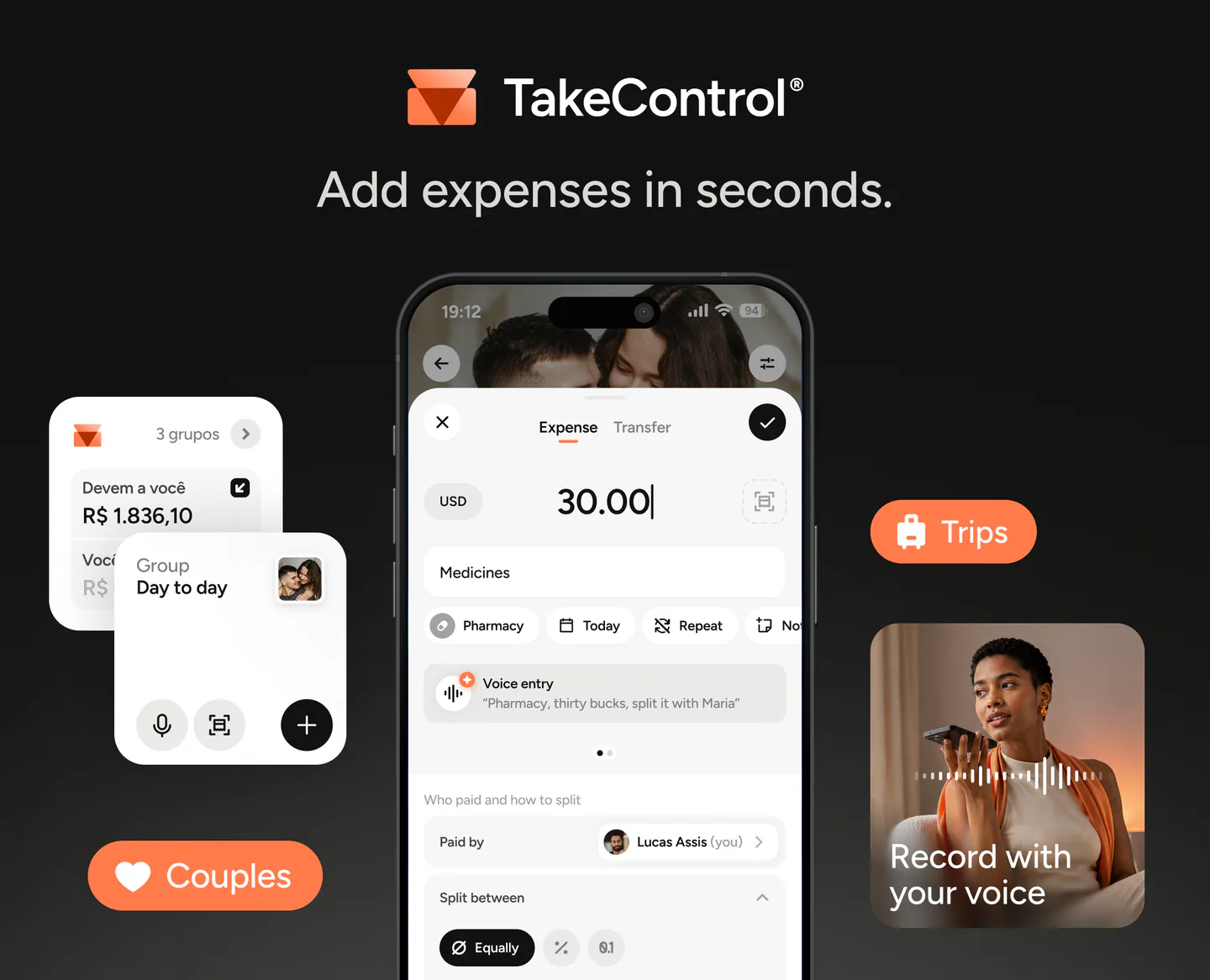
This is where an app actually helps. TakeControl lets you log group expenses the moment they happen, organize them by category (household, groceries, going out), and automatically shows who owes what, without converting currency by hand or fighting a spreadsheet in a language that is not yours.
Settle up weekly, never at the end of the program
Unlike a shared house that lasts for years, a study abroad program has a shelf life. That means letting a balance sit unpaid to “sort out later” is risky, because “later” might be a roommate who already flew back home. Settling up every week, or at most every two weeks, makes sure nobody gets stuck with a loss when someone leaves early.
Talk about money discomfort before it turns into resentment
People from different cultures handle money differently. In some countries, asking a friend to pay up right away is completely normal; in others, it sounds aggressive. When the group is international, it is worth spelling this out explicitly: “here, asking to be paid back is not rude, it is just how we stay organized.” That one simple sentence prevents a lot of unnecessary tension.
Agree on the deposit and early move-outs together
Many groups forget to agree, early on, about what happens to the security deposit when the lease ends or when someone decides to leave before the program is over. Decide upfront: who gets the deposit back at the end, how it gets split if a roommate leaves before the lease is up, and who covers that person’s share of the rent until a new tenant is found. Working this out on paper before it becomes a real issue keeps the last week of living together, which should be about goodbyes, from turning into a stressful negotiation over who owes what.
Conclusion
Splitting costs while studying abroad does not have to be a minefield. The secret is treating the topic with the same seriousness as any other household agreement: talk about it early, separate fixed from variable costs, log everything in real time, and settle up before anyone packs their bags home. With a bit of organization, it is entirely possible to finish your exchange program with great international friendships and zero financial loose ends.

I created TakeControl to make splitting expenses between couples and on trips simpler. Here, I share tips, app updates, lessons learned, and content to make managing shared expenses easier.
Frequently asked questions
The fairest approach is to set a proportional amount based on room size or privacy (private bathroom, window, closet space) before signing the lease, not after everyone has already moved in. Agree on the criteria and write it down, even if it is just a message in the group chat.
Yes, especially because you are dealing with different currencies, different languages, and people you will only know for a few months. An app like TakeControl centralizes expenses, converts amounts, and makes it clear who owes what without relying on a spreadsheet or on memory.
Close out balances regularly, ideally every week, and never let debts pile up until the end of the program. If someone is leaving early, settle by international transfer or ask them to pay off their share at least a week before they move out.
Separate fixed household costs (rent, utilities, internet, basic groceries) from social costs (bars, trips, dinners out) from day one. Only split evenly what everyone actually uses; the rest stays with whoever took part.
Pick one reference currency for all records, usually the local currency of the country you are living in, and make it clear that final settlements will also use it. This avoids arguments about the daily exchange rate and makes it easy to compare who spent more or less.
