

Bachelor and bachelorette party costs: who pays?
Learn who pays for a bachelor or bachelorette party and how to split lodging, transport, food, and activities fairly.

The group chat already has a name, a sticker pack, and a countdown: “Marina’s bachelorette, 42 days to go.” Someone suggests a beach house for the weekend, another sends a link to a themed dinner, a third person has already booked the transportation “because there was a discount.” Three weeks later, no one knows exactly how much it will cost, who has paid what, or why the group’s running total does not match what everyone agreed on.
If you have ever planned or joined a bachelor or bachelorette party, you know the problem is rarely a lack of enthusiasm. The problem is money: people with different budgets, costs that pop up along the way, and an organizer who ends up as the group’s accidental debt collector. The result, more often than not, is an awkward tension that lingers after the party, right when only the good memories should remain.
This guide shows how to structure the cost-splitting for a bachelor or bachelorette party before booking anything, so the group can actually enjoy the celebration instead of ending the weekend arguing about money.
Who pays for a bachelor or bachelorette party?
There is no fixed rule. A simple starting point is for each guest to pay their own share of lodging, transportation, food, and activities. If the group wants to cover the guest of honor, agree on that amount first and split it only among the people who opt in. The organizer should not be left covering bookings or surprises that the group did not approve.
For the rest of the wedding calendar, see which wedding party costs bridesmaids and groomsmen should discuss.
Why bachelor and bachelorette parties always run into money trouble
A bachelor or bachelorette party combines two things that, together, are the perfect recipe for financial friction: a large group, often made up of people who do not know each other very well, and a schedule full of variable costs like transportation, lodging, activities, and food.
The first problem is budget mismatch. In a group of ten people, it is common to have some who want to spend as little as possible and others who want to splurge on the experience. When the destination and itinerary get locked in without asking about everyone’s budget first, someone ends up feeling pressured to spend more than planned, or drops out at the last minute.
The second problem is unclear inclusions. “Let’s just split everything” sounds simple until the first round of drinks, when it is unclear whether that particular round goes into the shared bill or counts as individual. Without a rule set in advance, every payment turns into a small negotiation.
The third problem, maybe the most exhausting one, is that usually one or two people in the group, typically the maid of honor or best man, end up fronting most of the costs, either because they booked things on their own card or bought the decorations themselves. Chasing everyone else for reimbursement after the party is uncomfortable, and that discomfort is exactly what can sour a friendship that survived years of history.
How to organize bachelor and bachelorette party expenses
The good news is that most of this friction is avoidable with simple agreements made before anything gets booked. Here is what actually works.
Ask about the budget before picking a destination
Before deciding between a beach house, a different city, or a night out in your own town, discreetly ask each guest what range they can and want to spend. A quick poll in the group chat, using ranges instead of exact numbers, solves most of the problem right there.
This step avoids the worst-case scenario: locking in an expensive itinerary and then finding out half the group cannot come because it does not fit their budget. It is much easier to adjust the plan before booking than to fix it after a deposit is already down.
Decide what goes into the shared bill and what stays individual
Split expenses into three clear categories: what gets split equally among everyone (lodging, shared transportation, group activities), what is individual (extra drinks, off-menu snacks, personal purchases), and what is a surprise for the guest of honor (decorations, favors, gifts).
Communicating this split in advance prevents the feeling of “I’m paying for things I did not ask for.” Each guest knows exactly what is covered in the agreed amount and what they will need to cover on their own during the weekend.
Put one or two people in charge of the group fund
Just like with any event involving several people, it is essential to have someone centralizing the bigger payments, like the lodging deposit or the venue booking. Ideally, that is two people rather than one, to split the load of following up and avoid everything depending on a single person’s availability.
Those two people are also the ones tracking expenses made during the party itself, like a group dinner or transportation booked on the spot, so the final bill can be settled transparently.
Log expenses in real time, not afterward
The most common mistake is leaving everything to sort out “once we’re back,” with everyone trying to remember who paid for what based on scattered messages and screenshots of receipts. That almost always leads to disagreements, since everyone remembers the weekend a little differently.
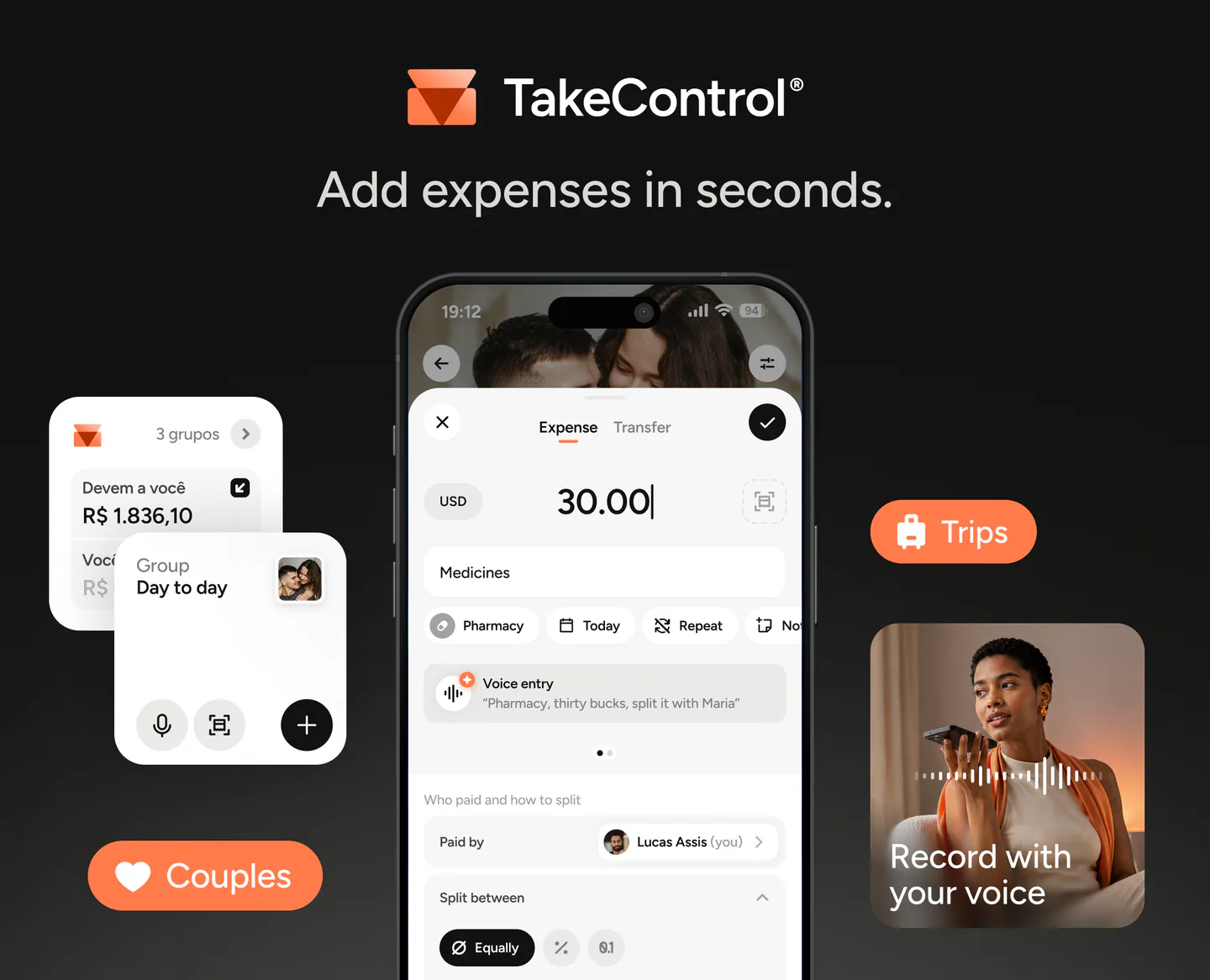
The better approach is logging expenses the moment they happen. With TakeControl, the group creates a dedicated list for the bachelor or bachelorette party, each expense gets added as soon as it occurs, and the app automatically calculates who owes what. That removes the “we’ll figure it out later” step entirely, and the organizer never has to chase anyone, since the app shows everyone’s outstanding balance on its own.
Agree on how to settle up at the end of the party
Before the group scatters, take a moment to review the final numbers: how much each person has already paid, what is still owed, and the deadline for any remaining payments. Doing this while everyone is still together is far more effective than trying to collect days later, once the excitement has faded and no one is in a rush to sort it out.
A short, clear deadline, like “everyone settles up by Sunday night,” keeps the balance from dragging on for weeks and turning into an annoying loose end.
Special cases: when the group has very different budgets
In larger groups, it is normal for not everyone to be able or willing to spend the same amount. In these cases, the fairest solution is usually offering two tracks within the same celebration: a base itinerary included in the amount everyone agreed to, and optional extra activities billed separately only to those who want to join.
That way, no one gets left out over budget, and no one feels entitled to complain about an expense they chose to skip. This kind of flexibility usually resolves most of the friction between guests with different financial situations.
What about destination parties abroad
Bachelor and bachelorette parties in a different country add an extra layer of complexity: currency exchange, expenses in different currencies, and purchases made at different times by different people.
In these cases, two precautions help a lot. First, agree on whether amounts will be tracked in the local currency or already converted, so no one is confused about how much they actually owe. Second, decide in advance who will cover shared costs at the destination, like a farewell dinner or airport transportation, so that person does not have to front everything out of pocket and then remember to collect from the group afterward. An app that converts and organizes amounts automatically clears up most of the confusion that tends to come with this kind of trip.
Conclusion
A bachelor or bachelorette party should be remembered for the celebration, not the headache of settling up afterward. Asking about the budget before picking a destination, separating shared costs from individual ones, assigning people to manage the fund, and logging expenses in real time are simple steps that prevent almost all the financial discomfort that tends to show up around this kind of event.
With these agreements made in advance, what’s left is what actually matters: the friendship that inspired the celebration in the first place.

I created TakeControl to make splitting expenses between couples and on trips simpler. Here, I share tips, app updates, lessons learned, and content to make managing shared expenses easier.
Frequently asked questions
The most common approach is for each guest to cover their own share of lodging, transportation, and meals, while the maid of honor or best man organizes small surprises for the bride or groom. There is no fixed rule; what matters is agreeing on it with the group before booking anything.
Set a per-person amount that covers lodging, activities, and part of the food, and track extra costs separately, like drinks or souvenirs for the guest of honor. An expense-splitting app keeps everything transparent without needing a spreadsheet.
Ask about everyone's budget before locking in the destination and itinerary, not after. If someone has already confirmed and later cannot pay, the group can offer cheaper lodging options or split activities into required and optional ones.
In most groups, the bridesmaids or groomsmen split the cost of decorations, favors, and small surprises among themselves, without adding it to the general cost shared with all guests. That keeps guests who are just attending from feeling like they paid for something they did not ask for.
Apps like TakeControl let you create a dedicated group for the trip, log every expense as it happens, and automatically see how much each person owes. That keeps the organizer from becoming the group's unofficial debt collector and reduces the awkwardness of talking about money after the party.
