

How to split trip costs when friends have different budgets
Learn how to separate shared costs, upgrades, and optional activities when friends on the same trip have different spending limits.

Someone in the group chat suggests a hotel. It has a pool, breakfast included, great location. A few people respond enthusiastically. One or two go quiet for a while before typing something vague. You have been on both sides of this moment.
Traveling with friends who have different budgets is one of the most common, and least talked about, tensions in adult friendships. Nobody wants to be the one who holds the group back. And nobody wants to stretch their finances beyond what they can handle. The result is usually silence, uncomfortable agreements, and debts that outlast the trip.
The good news is that a mixed-budget trip absolutely can work, but it takes honest planning from the start.
How do you split trip costs with different budgets?
Use the lowest comfortable budget to set the shared baseline. Whoever chooses an upgrade pays the difference, and optional activities are split only among the people joining them.
| Cost type | How to split it |
|---|---|
| Base lodging and transport | Among everyone confirmed, based on use |
| Better room or premium seat | The person choosing the upgrade pays the difference |
| Optional activity | Only among participants |
| Shopping and personal spending | Each person pays their own cost |
For trips with several family units, see how to split family vacation expenses fairly.
The money knot nobody wants to untangle
The issue is not that your friends earn different amounts. The issue is how groups handle that difference, or more often, how they avoid handling it.
The default approach is to split everything equally. That seems fair on the surface, but when each person has different income, different spending habits, and values different things on a trip, equal splitting means someone is regularly spending well beyond their comfort zone.
There is also the social pressure factor. When the group votes for the more expensive option, the person who cannot afford it often says nothing. They agree, pay somehow, and come home drained or in debt. They might not come on the next trip.
This dynamic erodes friendships gradually. Not dramatically, but steadily. The friend who always suggests expensive things stops being invited. The one who always pulls back gets a reputation for being difficult. Everyone ends up worse off.
And it is not about anyone being inconsiderate. It is structural: without a clear system, groups default to equal splits, which ignores real differences.
How to organize a trip that works for everyone
The answer is not to make every trip as cheap as possible, or to exclude people with smaller budgets. It is to design the trip from the beginning with those differences in mind.
Talk about money before booking anything
The most important conversation happens before any reservation is made. Ask the group directly: what is the most each person can realistically spend in total? This number does not have to be shared publicly if anyone is uncomfortable, but whoever is organizing needs to know the reality.
Knowing the tightest budget in the group lets you plan around it. This is not about lowering the bar; it is about setting a foundation so no one comes home in debt.
If open numbers feel too personal, use categories instead: who is fine with basic accommodation and who wants more comfort. Who is willing to pay for premium activities and who prefers the free options. That already organizes the planning without exposing anyone.
Separate shared costs from personal costs
Not everything needs to be split among everyone. There are shared expenses (accommodation, group transport, activities the whole group does together) and personal ones (what each person orders at a restaurant, optional activities, souvenirs, personal shopping).
The clearer this line is, the less friction there is. For shared expenses, the group decides together. For personal ones, each person handles their own.
This prevents the classic scenario where someone orders just water and ends up splitting the drinks bill evenly with everyone else.
Build options into the same itinerary
It is possible to share a trip without everyone doing exactly the same thing. If the group wants to splurge on a nice restaurant one evening, some people can go and others can find a cheaper option or cook at the accommodation. On other days, everyone eats together somewhere that fits the smallest budget.
The same applies to activities. If there is an optional excursion some people cannot or do not want to pay for, that is fine. Part of the group goes; others enjoy a free day doing something else.
This takes more upfront planning but creates a much more comfortable environment for everyone. Nobody feels excluded, and nobody feels pressured.
Use an app to keep the group accounts in one place
One of the biggest headaches in group travel is tracking who paid what and who owes whom. When some people covered accommodation, others paid for dinner, and others handled the rental car, the math gets complicated fast.
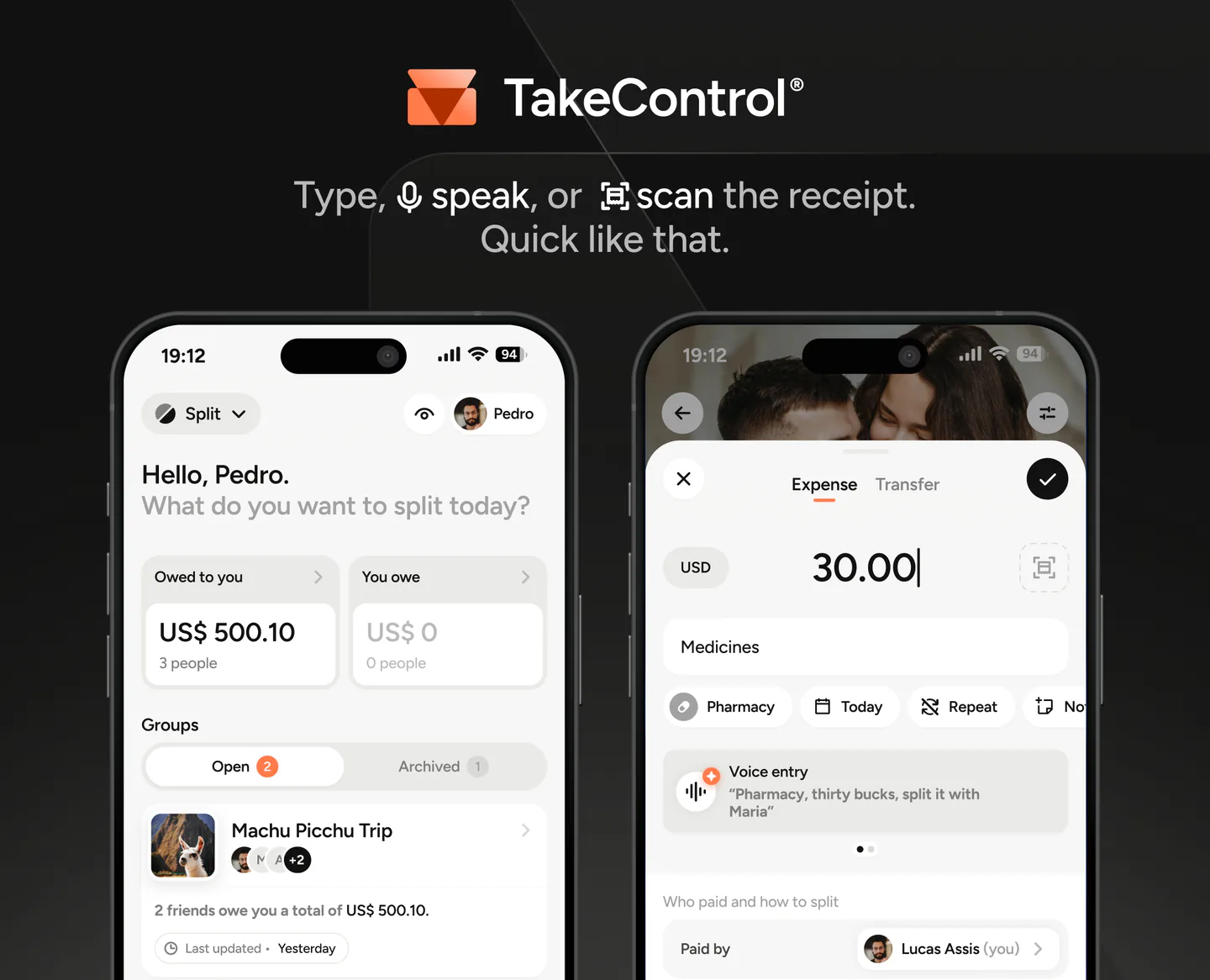
Apps like TakeControl let you log each expense as it happens, set who participated in each cost, and see a running balance for the whole trip. This is especially useful when people pay different amounts for the same experience.
For example: if five people are sharing accommodation that costs $200, but two chose a private room and three shared a room, TakeControl lets you split those costs with different amounts per person rather than forcing an equal division that does not reflect what anyone actually got.
Another practical benefit: when expenses are tracked in real time, there are no surprises at the end. Everyone can see what has been spent, and the money conversation becomes a quick app check instead of a tense negotiation.
Settle up during the trip, not just at the end
One habit that reduces end-of-trip stress significantly: do partial settlements during the trip, not only after everyone is home.
After a weekend away, the amounts are smaller and easier to process. After ten days abroad, the accounts can be complex and the tension rises with them. A quick mid-trip settlement keeps everything transparent and prevents anyone from arriving home with a long list of transfers to sort out.
If the group is using an app, this takes about two minutes: open it, see the current summary, and clear the smaller debts.
The best trips are not the most expensive ones
What makes a trip memorable is not the budget. It is that everyone felt comfortable, participated in what mattered to them, and came back without the feeling of having been pushed into spending more than they could.
Getting there requires an honest conversation before you leave and a simple system to keep the accounts clear along the way. After that, it is just about enjoying the trip.
Groups that talk about money openly before traveling tend to have fewer conflicts along the way. And friendships come back stronger from trips where no one was left out because of budget.

I created TakeControl to make splitting expenses between couples and on trips simpler. Here, I share tips, app updates, lessons learned, and content to make managing shared expenses easier.
Frequently asked questions
Each room type should be calculated separately. Whoever booked the private room pays that cost; those sharing a room split that cost among themselves. Expense-splitting apps let you log these amounts with different shares for each person, so no one subsidizes someone else's upgrade.
The best approach is to talk about it before you leave. If someone can't afford a specific activity or hotel, they simply don't participate in that cost, without awkwardness. Marking certain expenses as optional rather than shared gives people an easy way to opt out without feeling excluded.
Show them that it removes the mental math and avoids the uncomfortable end-of-trip settling-up conversation. One person starts logging expenses, and the rest usually join in once they see how transparent it makes everything. The first few entries are the hardest part.
Yes, this is one of the most important decisions to make upfront. Shared costs (accommodation, group transport, group activities) get split among everyone. Personal costs (what each person orders at dinner, optional excursions, shopping) stay with the individual. This one rule eliminates most expense conflicts.
Ask everyone to share, honestly, the most they can spend in total. Use the smallest figure as the baseline for shared expenses. More expensive options can exist as voluntary add-ons for those who want them. Planning around the tightest budget keeps no one out.
