















How couples can settle shared expenses once a month
Add shared costs, compare what each partner paid and calculate one net payment to settle the month without reimbursing every purchase.

Rent leaves one account, groceries land on the other person’s card, and each partner picks up a few household bills. Reimbursing every purchase creates a trail of small payments without answering the useful question: after everything, who paid more than their agreed share?
A monthly settlement answers that question with one net balance. Record shared costs as they happen, apply the rule you agreed on, then transfer only the difference. The rule may be 50/50, income-based or custom; the settlement method stays the same.
If you have not chosen a rule yet, start with the complete guide to splitting expenses as a couple. This guide begins after that decision.
The settlement formula
For each partner:
- Target share = total shared expenses × agreed percentage.
- Balance = amount paid − target share.
- A positive balance is money to receive; a negative balance is money to pay.
For two people, those balances have the same amount with opposite signs. If one partner should receive $620, the other should pay $620. One payment settles the ledger.
This calculation does not decide what is fair. It checks actual payments against your agreement. Use the couple expense calculator if you want to compare 50/50 with an income-based split first.
Decide what belongs in the month
Set a cutoff, such as the first through the last calendar day. A purchase made November 30 can belong to November even if the credit card statement is paid in December. Consistency matters more than the particular cutoff.
Classify spending by purpose, not by card. Housing, groceries, utilities, internet and a meal you both agreed to share may count. Personal clothing, hobbies, earlier debt and surprise gifts usually do not.
Refunds reduce the original expense. If a $100 household order receives a $20 refund, the shared cost is $80. A payment one partner already sent the other is different: it reduces the balance and should not be added as another household expense.
If one partner covered a strictly personal purchase for the other, treat it as a personal reimbursement or assign the full item to the person who used it. Splitting it automatically changes the agreement.
Worked example: who sends the payment?
Maya and Noah keep separate accounts and split shared expenses evenly:
| Expense | Amount | Paid by |
|---|---|---|
| Rent | $1,600 | Maya |
| Groceries | $400 | Maya |
| Groceries | $200 | Noah |
| Utilities | $180 | Maya |
| Internet | $70 | Noah |
| Dinner together | $150 | Noah |
| Total | $2,600 | Maya: $2,180 · Noah: $420 |
At 50/50, each person’s target is $1,300. Maya paid $880 above her target; Noah paid $880 below his. Noah sends Maya $880. Their net cost is then $1,300 each.
They do not need separate reimbursements for rent, utilities and groceries. The net balance already offsets every shared payment.
What changes with an income-based split?
Suppose they agreed Maya would cover 60% and Noah 40% of the same $2,600 total:
- Maya’s target is $1,560;
- Noah’s target is $1,040;
- Maya paid $620 above her target;
- Noah paid $620 below his target.
In that version, Noah sends Maya $620. The payment history did not change; only their target shares changed.
Do not renegotiate the percentage merely because the month-end number feels surprising. Settle under the rule that applied during the period, then agree on any change for future expenses. Couples with fluctuating pay can use the guide to splitting bills with variable income.
Mistakes that distort the balance
Counting card purchases and the statement payment. Once individual purchases are recorded, paying the card is a bank transfer, not new consumption.
Using the whole card statement. A statement may mix shared groceries with personal transport, clothing and subscriptions. Include the relevant lines, not the total.
Mixing months silently. You can add a forgotten bill next month, but label it as a prior-period adjustment so the current month remains understandable.
Ignoring who participated. A solo lunch does not become shared because it used the same card as the weekly grocery run.
Deleting history after payment. Record the settlement instead. That preserves the reason the balance returned to zero.
Make closing the month a ten-minute habit
Choose a predictable time, such as the last Sunday evening. Check only for missing expenses, personal items entered by mistake and pending refunds. Then review the balance and send one bank transfer or payment-app transfer.
Large one-off purchases such as furniture, a renovation or a vacation can have their own group or settlement. That keeps recurring household expenses readable.
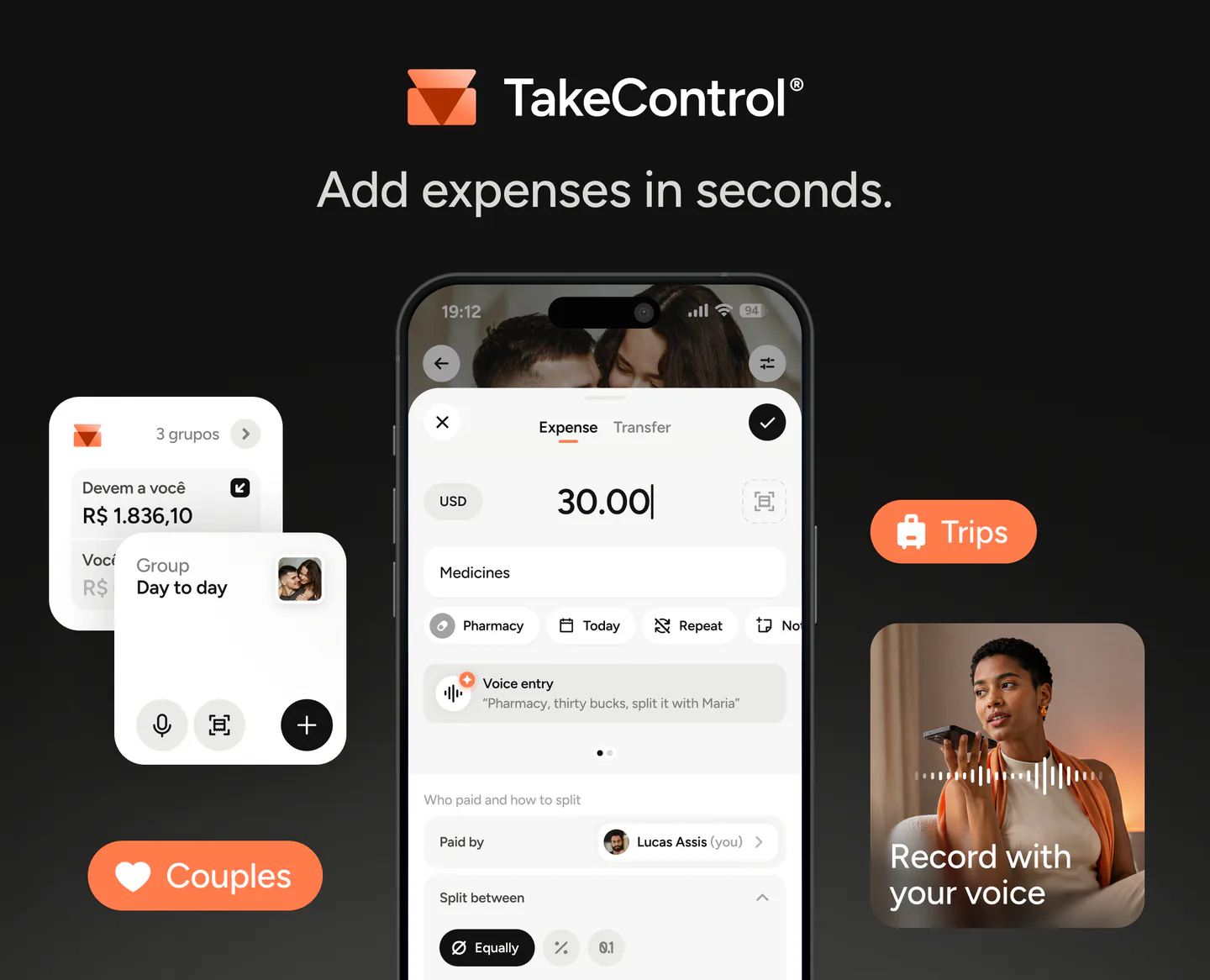
In TakeControl, each entry records who paid and how the expense is split. The app updates the balances and shows who should pay whom. After sending money through your bank or preferred payment service, record the settlement with the payer, recipient and amount. TakeControl organizes the balance but does not move money.
Download TakeControl, record shared costs as they happen and turn the monthly close into one clear payment.
Sources and verification
TakeControl feature checked for this guide:

I created TakeControl to make splitting expenses between couples and on trips simpler. Here, I share tips, app updates, lessons learned, and content to make managing shared expenses easier.
Frequently asked questions
Add the shared expenses, calculate each partner’s target share and subtract what each person already paid. The partner below their target sends the difference to the partner above it.
No. A net balance offsets the shared payments against one another. When only two people are involved, a single payment can settle the whole period.
Only if you explicitly agreed to share it. Clothing, hobbies, individual debt and personal purchases are usually clearer outside the shared total. A personal advance can be recorded as a direct reimbursement.
Multiply the shared total by each partner’s agreed percentage. Compare that target with what each person paid; the difference shows who pays and how much.
Not if the individual card purchases were already recorded. Adding the statement payment as well would count the same spending twice.
Send the money outside the app, then record a settlement with the payer, recipient and amount. TakeControl updates the group balance; it does not move money from your account.
