

Splitting the bar tab when everyone ordered something different
The check arrived and the whole table went quiet? Here's how to split bar expenses fairly, without awkwardness and without leaving anyone with an unpaid debt.

The check lands on the table and the whole group goes quiet. Everyone stares at it like it might bite. One person had two craft beers and shared an appetizer. Another nursed a sparkling water all night. Someone disappeared for half an hour and came back with a cocktail that cost twice as much as everything else combined. Now what?
This scene plays out at every after-work happy hour, every birthday dinner at a bar, every casual Friday night out. The issue is rarely the money itself; it is the combination of different orders, different expectations, and nobody wanting to be the first one to bring it up.
Why the check always creates tension
Splitting evenly sounds simple: add everything up and divide by the number of people. But that formula breaks down fast when orders are wildly different. Equal division is not fair division when consumption was unequal.
The person who had one beer ends up covering part of someone else’s whiskey. The one who only drank soda quietly absorbs costs that were never theirs. Nobody says anything because the awkwardness of speaking up feels worse than the amount in question. The night ends fine on the surface, but a small resentment builds over time.
The tip that nobody accounts for
Whether it is an automatic service charge or a voluntary tip, this extra cost almost never gets split proportionally. It either lands on the person who put the card down, or it gets tossed in without anyone doing the math. Both outcomes leave someone paying more than they should.
The problem of the non-drinker
There is usually someone at the table who skipped the alcohol because they were driving, pregnant, cutting back, or just not feeling it. That person is unlikely to speak up when the check arrives. Splitting evenly ignores their situation entirely, and the quiet unfairness of that tends to stick.
The cash-and-change spiral
When one person pays with cash and waits for change to redistribute, things get complicated. Someone rounds up without asking. Another rounds down without saying anything. The total ends up off by a few dollars and someone absorbs the gap without choosing to.
Four ways to split the tab that actually work
There is no single method that fits every group or every night out. What matters is that everyone agrees on an approach before the first round is ordered.
Everyone pays for what they ordered
The most equitable method, and the most effort. It works well if the bar allows separate checks, or if someone at the table notes orders as they happen. The upside is that there is no resentment. The downside is that it requires real-time tracking and a clear head at the end of the night.
A simple tip: when the server comes to take the order, one person in the group also takes notes on their phone. Nothing fancy, just names and what each person got. By the end of the night, it takes two minutes to tally.
Round system
Each person buys a full round for the table and keeps rotating. This works well when the group is roughly the same size throughout the night and everyone drinks at a similar pace. When someone joins late or leaves early, the math starts to fall apart.
This method relies on trust. If everyone follows through on their round, it balances out over time. If someone consistently disappears before their turn, it stops working fast.
One person pays, everyone transfers
Increasingly common with mobile payment apps. One person puts the whole tab on their card and the others send their share. The challenge is calculating the right amount for each person, especially when orders differed and a tip is involved.
This works well when someone in the group takes a minute to do the actual math before everyone scatters. The risk is that the person who paid ends up short if people send round numbers without accounting for their full share.
Use a bill-splitting app to track in real time
This approach solves all three problems above. As each person orders, someone logs it in the app. At the end of the night, the app calculates what each person owes, with proportional tips and shared items handled automatically. No guesswork, no rounding disputes, no awkward silence.
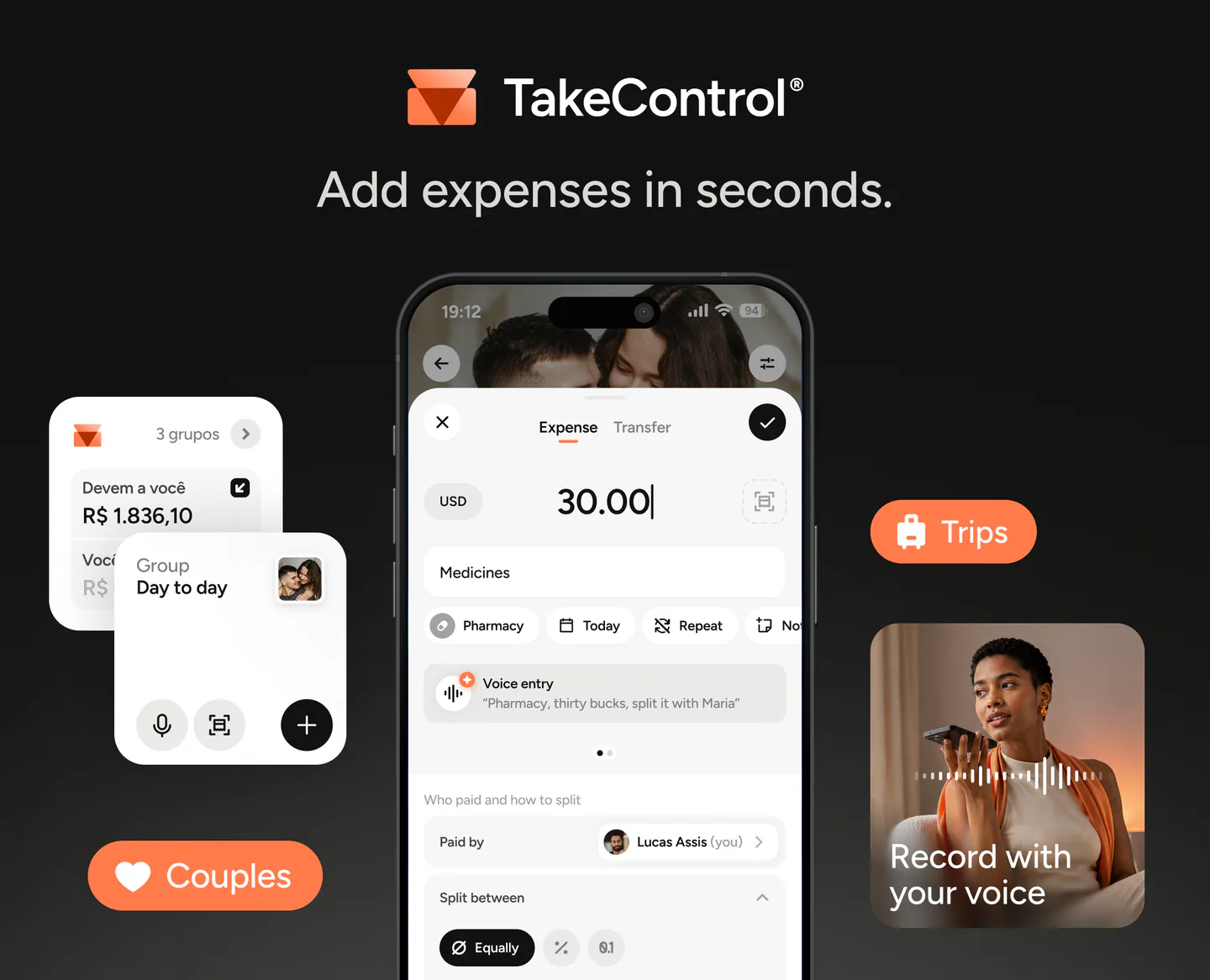
TakeControl works well for this: create a group, log each expense under the person who ordered it, and by the time the check arrives the app already shows who owes what to whom. It works for a one-off happy hour, and it is especially useful for groups who go out regularly and want to track running balances over time.
The agreement that saves the night
The most effective way to avoid check anxiety is to agree on a method before anyone orders. This does not need to be a formal conversation. One question when everyone sits down is enough:
“Are we splitting evenly or paying for what we each get?”
If someone is not drinking alcohol, that comes up naturally. If someone needs to leave early, that gets factored in from the start. The prior agreement removes the assumption that everyone is on the same page, because often they are not.
Settling the tip question in advance helps too. If the group decides to include a 15% tip in the split, great. If not, also fine. What does not work is leaving it for when the check is already on the table and half the group is putting their coats on.
How to bring it up without making it weird
Talking about money in a social setting can feel awkward, but it does not have to be. “How do we want to handle the bill?” is a much easier question to answer before anyone has ordered than after. The tone matters though.
“I am not paying for everyone else’s drinks” lands very differently from “should we use an app or does this place do separate checks?” The second version gets the same point across without the edge.
What to do when the awkwardness has already happened
Sometimes the check arrives, silence takes over, and it is already clear that the split is going to be unfair. Someone ordered twice as much as everyone else and is waiting for an even division as if that is the obvious default.
The move that works is to acknowledge the difference and adjust. “I ordered more, let me chip in extra” is a sentence that immediately defuses the situation. The person who says it loses very little in money and gains a lot in goodwill.
What does not work is pretending there is no problem when there clearly is. The resentment from paying more than you should, or from summoning the nerve to point it out, outlasts the dollar amount by a long stretch. Groups that hold together over time are the ones where people feel comfortable addressing small things before they become patterns.
Matching the method to your group
The right method depends on the people, the place, and how well everyone knows each other.
For newer groups or more formal gatherings, paying individually tends to work best because it does not require accumulated trust. For close friends who go out regularly, a round system or a running balance in an app makes more sense because fairness evens out over multiple outings rather than one specific night.
What matters most is that the method is explicit. An agreed-upon approach turns a potential conflict into just another part of the plan.
Splitting the bar tab does not have to be the most stressful part of the night. A simple question before the first round and, if needed, an app to handle the math, and the group walks out with a clean slate and a reason to do it again soon.

I created TakeControl to make splitting expenses between couples and on trips simpler. Here, I share tips, app updates, lessons learned, and content to make managing shared expenses easier.
Frequently asked questions
The fairest approach is for each person to pay for what they ordered. If the group prefers to split evenly, agree on that before anyone orders so that people who drink less have the chance to say so upfront.
Ideally, they should cover their share before leaving. Tracking orders in a bill-splitting app in real time makes this easy: when someone heads out, their total is already calculated and they can pay right away.
Whether a tip or service charge is required depends on local custom and the establishment. The safest move is for the group to agree before ordering whether to include it in the split and how to divide it proportionally.
Create a group in the app, add everyone at the table, and log each drink or dish under the person who ordered it. When the check arrives, the app calculates exactly what each person owes, including shared items and service charges.
Agree on a split method as soon as everyone sits down. A simple question, such as "are we splitting evenly or by what we ordered?", removes all the guesswork and makes the end of the night much smoother.
