

How to organize a group gift and make sure everyone chips in
Collecting money for a group gift sounds easy, but someone always goes quiet. Learn how to run a group collection that actually works, from start to finish.

A message drops in the group chat: “Hey everyone, should we chip in for a birthday gift for Sarah? If we each put in $25 we can get that skincare set she has been eyeing.” Twenty reactions. Ten confirmations. A week later, six people have paid, two said “I will send it later today,” and three have gone completely quiet.
If that sounds familiar, it is not a coincidence. Organizing a group gift collection seems straightforward, but it rarely is. The problem is not that people do not want to participate; most of them do. The problem is the lack of structure. Without a clear deadline, a designated person in charge, and a record of who has paid, a simple collection turns into an awkward spiral of unanswered messages and uncomfortable follow-ups.
The good news is that a few simple adjustments change everything. In this guide, you will see how to run a group gift collection from start to finish so the gift actually happens, the money adds up, and friendships stay intact.
Why group gift collections always get complicated
The most common mistake is assuming everything will sort itself out. People have good intentions, but life gets in the way. The transfer that was going to happen “a bit later” gets pushed to the next day, then to the weekend, and by the end of the month no one remembers.
Beyond procrastination, three problems appear in almost every poorly organized collection.
The first is no deadline. When there is no cut-off date, each person decides on their own when to pay. The result: the organizer spends weeks chasing money.
The second is no single person in charge. The group decides to do a collection, but no one defines who will gather the payments, who will buy the gift, and who will handle any change. That ambiguity leads to confusion, and in the end no one is quite sure what happened to the money.
The third problem is no record. When payments arrive via different apps, in different amounts, and without notification, it becomes impossible to know who has paid, who has not, and how much is still needed. The organizer ends up as an informal accountant trying to piece together a puzzle of scattered transactions.
When these three problems come together, the collection stops being fun and becomes a source of stress for the organizer and guilt for the people who forgot to pay.
How to run a group gift collection that actually works
A successful group gift collection does not need complicated tools or formal meetings. It needs four things: a defined amount, a clear deadline, one responsible person, and an organized record.
Set the amount and deadline before you launch
Before you send the first message to the group, answer two questions: how much will the gift cost, and when do you need the money by?
With those two numbers in hand, your communication becomes much more direct. Instead of “should we do a group gift?”, you can send: “Hey everyone, we are chipping in $25 each for Jamie’s birthday gift. Payment deadline: Friday the 11th, Venmo @yourname.” A message like that dramatically reduces procrastination because the amount and the date are clear from the start.
If the group has not decided on the gift yet, set an estimated amount and adjust later if there is money left over. But never launch the collection without a concrete number. “Let us do a group gift but I do not know the amount yet” is how collections drag on for weeks without going anywhere.
One practical tip: set your internal deadline two or three days before you actually need the money. That way, if a few people are late, you still have a buffer to buy the gift on time.
Assign one person to manage everything
The collection needs an owner. This person is responsible for gathering payments, following up with anyone who is late, buying the gift, and reporting back to the group afterward.
Ideally, the person in charge is whoever is most organized and has the time, not necessarily whoever came up with the idea. Having a single point of contact prevents the classic situation where everyone thought someone else was handling it.
It is also this person’s job to keep the group updated: how many people have paid, how much is still needed, and when the gift will be purchased. That transparency keeps people engaged and removes the uncertainty that makes everyone anxious.
Use a separate channel for the collection
Mixing the gift planning into the main friend group chat is a recipe for chaos. Messages get lost, confirmations get buried under memes and side conversations, and no one can keep track of where things stand.
The better approach is to create a separate group or thread just for the people participating. This makes tracking easier and gives the person in charge a clear view of who has confirmed and who has not.
A dedicated channel also matters for surprise gifts. In mixed groups, there is always a risk that a notification pops up on the birthday person’s phone at the wrong moment.
Track everything with an app
This is the step most people skip, and the one they miss the most. When payments arrive without any organization, the person running the collection becomes an informal bookkeeper trying to remember who paid how much and when.
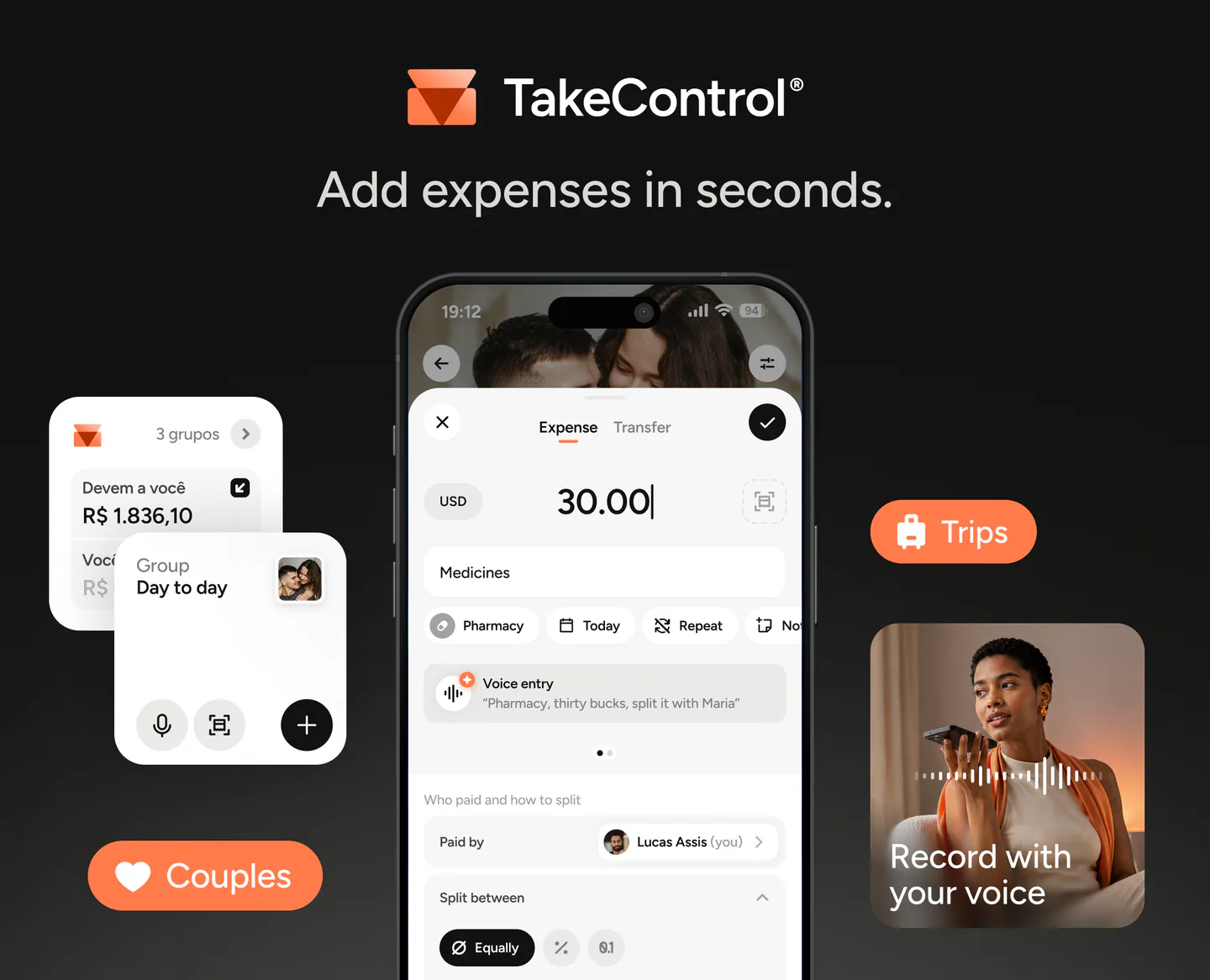
A shared expense app makes this simple. With TakeControl, you create a group with everyone participating, enter the total amount to split, and the app shows in real time who has paid, who still owes, and exactly how much each person needs to send. No spreadsheet, no mental math, no messages asking “did you already send me your share?”
Having the record visible to everyone in the app also reduces the need for direct follow-ups, which is the most uncomfortable part of any collection. People see their own name on the pending list and take care of it themselves.
How to follow up without making it awkward
Even with all the right structure, someone will always be late. And following up is where most organizers feel the most discomfort, especially with close friends or coworkers.
The key is never to make the reminder feel like an accusation. Instead of “you forgot to pay,” try “hey, the collection closes tomorrow, can you send your share by then?” The difference in tone is small, but it matters a lot for the relationship.
If someone does not respond after the deadline, a second reminder is still reasonable. After that, the organizer needs to decide with the group: either the people who have paid cover the difference proportionally, or the gift is bought with whatever has been collected.
The second option tends to generate less long-term resentment. A gift within the actual budget is better than one that left someone out of pocket.
Close the accounts after delivery
Once the gift has been given, share a quick summary with the group: how much was collected, how much the gift cost, and what happened to any leftover money.
This wrap-up seems like a small detail, but it is what makes people say yes the next time without hesitation. When participants know the accounts will be settled transparently, they feel more comfortable contributing from the very start.
If there is money left over, the best options are to refund everyone proportionally or set it aside for the next occasion, if the group agrees. What should not happen is the organizer keeping the change without mentioning it.
Conclusion
A group gift collection does not have to mean stress or awkward silences. With an amount and deadline set before you start, one person in charge, a dedicated channel, and an app to track payments, the whole experience changes.
The gift comes together on time, the money gets accounted for, and everyone is happy to do it again next time.

I created TakeControl to make splitting expenses between couples and on trips simpler. Here, I share tips, app updates, lessons learned, and content to make managing shared expenses easier.
Frequently asked questions
Set the amount per person and the deadline before you announce it to the group. Assign one person to handle all payments and use an app to track who has paid. These three steps make the whole process faster and far less stressful.
Send a friendly reminder with the remaining time before the deadline, without any accusatory tone. If they still have not paid by the cut-off date, the group can split the difference among those who contributed, or buy a gift within the available budget.
Apps like TakeControl let you create a group, enter the total amount, and see in real time who has paid and who still owes. It removes the need for manual tracking and reduces awkward follow-ups since everyone can see their own status in the app.
The simplest approach is to divide the cost equally among participants. If there are significant income differences in the group, some people can contribute more and others less, as long as the arrangement is transparent to everyone from the start.
Ideally 10 to 14 days before the date. That window is enough to collect payments, buy the gift, and still have time to wrap or personalize it. Collections launched fewer than 5 days out tend to create more pressure and a higher rate of late payments.
