

Pickup soccer: how to split field time, gear, and the post-game beers
Monthly dues, field rental, a new ball, drinks after the game: here is how to organize your pickup soccer group's expenses without relying on memory.

Thursday, 8:30pm, the group chat lights up. “Who’s in for tonight?” Twelve thumbs-up show up within five minutes. The game happens, everyone heads home tired and happy, and nobody says a word about money. Except the field cost $140, someone fronted last month’s payment, the ball popped last week and needs replacing, and three guys still haven’t paid their dues for June.
That scene plays out in pickup soccer groups everywhere, from casual weekend kickabouts to teams that already have a name and matching jerseys. The game itself is easy to organize. The money around it, not so much.
Why the money side of pickup soccer always turns into a mess
The problem is rarely bad intentions. It’s the lack of a system.
Nobody knows exactly who has paid. Without any record, that information lives in the organizer’s head, and memory fails. The organizer ends up playing the role of collector, a job nobody actually wants.
Expenses get mixed together. Field rental, a new ball, jerseys, referee fees, and drinks after the game all blur into one mental pile. The result: the guys who skip the bar feel it’s unfair to split everything evenly, and the ones who stay feel like they’re being charged twice.
The roster changes every week. Casual groups rarely have a fixed lineup. One person only plays when they can make it, another brings a friend last minute. Without a clear rule, nobody knows who was actually supposed to pay for that specific session.
Someone always fronts the money. Somebody inevitably pays for the field out of pocket to lock in the booking. If that’s not tracked anywhere, it’s money that quietly disappears by month’s end, with nobody sure exactly how much everyone else owes that person.
None of this feels dramatic on its own, but let it pile up over a season and the mood of the group starts to sour, even though the whole point was just to have fun.
How to organize your pickup soccer group’s expenses
Choose between monthly dues or a per-game split
The first thing to agree on is the billing model.
Monthly dues work well when the group is stable: the same 14 or 16 players, week after week. Everyone pays a fixed amount each month regardless of missing a game or two. It’s predictable and cuts down collection to once a month instead of every session.
Per-game splitting is better when the lineup varies. That day’s field cost gets divided by however many people showed up, and only players who actually played chip in. Less predictable, but fairer for casual groups.
A hybrid model also works: low monthly dues to cover fixed costs (referee, jerseys, ball) plus a per-game charge for the field itself.
Whichever model you pick, the real key is sticking with just one for at least a season. Switching the rule every month depending on who’s complaining loudest that week is what actually causes confusion. The group settles into a rule once it’s consistent, even if it’s not perfect.
Agree on prorating for people who join mid-stream
Every pickup group picks up new players from time to time: the friend someone brought once who stuck around, the coworker who joined the group chat in March. If monthly dues were already set at the start of the month, it’s fair to charge a prorated amount for anyone who joins after the 15th, say, instead of billing a full month to someone who’ll only play twice.
The same goes for people leaving. Deciding upfront whether paid dues get refunded, carried over as credit for next month, or simply forfeited keeps that conversation from becoming an awkward one-off, handled differently every time it comes up.
Set aside a reserve for gear and surprises
Balls, jerseys, and goal nets wear out and need replacing eventually. If that cost isn’t planned for somewhere, it always catches the group off guard and turns into an annoying emergency ask.
The simple fix is setting aside a small slice of monthly dues, or a fixed amount per game, to build a gear fund. When the ball finally pops, the money is already there and nobody has to scramble for an emergency collection.
Keep game-day costs separate from the after-party
The bar or diner after the game is one of the best parts of the week, but it’s also a common source of friction when it comes to splitting the bill. Not everyone stays, and the ones who do don’t always order the same amount.
Treat the after-party as a completely separate expense from the field. Settle the bar tab only among whoever actually stayed, right there in that night’s specific group chat, without folding it into the monthly dues. That keeps the person who always heads straight home from feeling like they’re paying for a beer they never drank.
Log every expense in one place
The biggest organizational upgrade any pickup group can make happens when someone stops relying on memory and starts logging everything. It doesn’t need to be complicated. A simple spreadsheet already helps, but it requires someone to update it manually, and it’s easy for an entry to slip through.
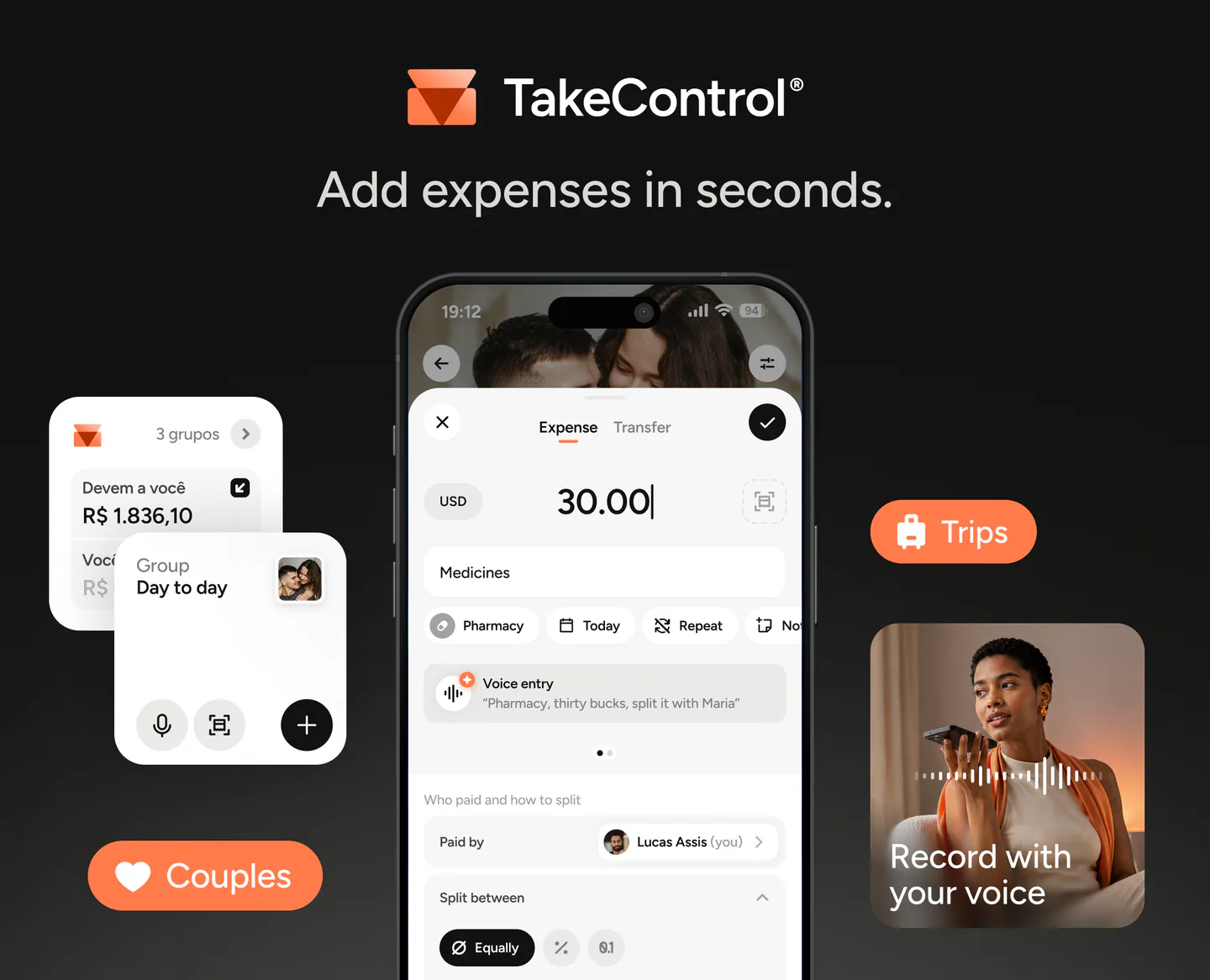
TakeControl handles this more directly. You create a permanent group for your team, log monthly dues, each week’s field cost, who fronted the payment, and gear expenses. The app automatically calculates each player’s balance, showing who’s paid up and who still owes, without the organizer doing mental math or chasing anyone down in a DM.
Since the roster shifts over time, having that history logged also helps whenever someone joins mid-month or needs to prove they already paid for a given week.
Agree on the rules before the problem shows up
Most friction in pickup soccer groups comes from situations nobody defined ahead of time. It’s worth agreeing, in writing in the group chat, on at least three things:
What happens when someone confirms and doesn’t show. The deadline for paying dues before it turns into an awkward reminder. And what happens if the field needs to be cancelled last minute, because of rain, for example.
Having those answers ready before the first conflict keeps that conversation from happening at the worst possible moment, right when someone is already annoyed.
When it’s worth formalizing your pickup group
Small, newly formed groups can get by with a verbal agreement and a one-off payment each week. But as the group grows, gets a team name, buys matching jerseys, or starts playing in amateur leagues, that informality starts costing real money: small $10 or $15 mismatches here and there, multiplied by 15 players over a year, add up to a meaningful amount.
At that point, formalizing expense splitting in a dedicated group, with every expense logged and balances calculated automatically, stops being a nice-to-have and becomes standard practice for an organized team. It’s the difference between a pickup group that lasts six months and one that’s already celebrating a decade together.
It’s also worth noting that pickup groups that evolve into amateur leagues tend to pick up bigger, less frequent expenses: tournament entry fees, new uniforms, travel to another city for a match. Those one-off costs don’t fit the regular monthly flow and deserve to be tracked as a separate project within the group, with its own fundraising goal and deadline, so they don’t get tangled up with day-to-day tracking.
Conclusion
The game itself is rarely the problem. It’s everything around it, field time, gear, dues, and drinks after, that tends to sour the mood of a group that just wanted to have fun. With an agreed billing model, a reserve for surprises, and a reliable record of every expense, your pickup group can drop the “collector” role and get back to what matters: playing ball with people you like.

I created TakeControl to make splitting expenses between couples and on trips simpler. Here, I share tips, app updates, lessons learned, and content to make managing shared expenses easier.
Frequently asked questions
It depends on the size of the group. With a fixed roster every week, monthly dues are simpler. If the lineup changes a lot, splitting the field cost per game among whoever confirmed usually feels fairer.
Agree on this rule before it becomes a real problem: if the field was already booked based on confirmations, whoever skips without enough notice still pays their share.
Set a fixed due date each month and have everyone send payment to one dedicated account for the group. When collecting money is a group rule rather than a personal request, nobody has to play the bad guy.
Yes. They follow different logic: one is fixed and mandatory, the other is optional and changes every week. Mixing the two just complicates the math and feels unfair to anyone who skips the bar.
Yes. Apps like TakeControl let you create a permanent group for your team, log every expense (field, gear, drinks), and automatically see who is paid up and who still owes, without a spreadsheet or relying on memory.
