

Wedding party costs: what bridesmaids and groomsmen pay
See which wedding party expenses to discuss and how bridesmaids and groomsmen can split outfits, gifts, events, and travel fairly.

The text comes in with a string of heart emojis: “Will you be my bridesmaid?” The excitement lasts about two days. Then the group chat starts, the first planning call for the bridal shower happens, someone sends a link to dress options, a date gets picked for the bachelorette party, and somewhere in all of it sits the question nobody wants to ask out loud: how much is this going to cost, and who is paying for what?
Getting asked to be part of the wedding party is an honor, but it can also involve an outfit, a gift, travel, and events on different dates. Without a plan, one person may end up fronting more expenses than everyone else simply because nobody talked about the budget ahead of time.
Which wedding party costs should the group discuss?
There is no required list or universal rule for who pays. Before anyone buys or books, the group should clarify these five cost categories:
| Cost | What to agree on first |
|---|---|
| Outfit and styling | Whether each person chooses and pays for their own look or the group uses one vendor |
| Wedding gift | Whether the gift is individual or shared by the group |
| Showers and gatherings | Who is organizing and the spending limit per person |
| Bachelor or bachelorette party | What belongs in the shared bill and whether the guest of honor’s share is split |
| Travel and lodging | Which costs are individual and which bookings are shared |
If a pre-wedding trip is part of the plan, use the guide to who pays and how to split bachelor or bachelorette party costs.
The problem: costs spread out over months with no one tracking them
Unlike a group trip or a dinner out, wedding party expenses do not happen in a single day. They stretch across six months, a year, sometimes longer: the engagement party, the bridal shower, the bachelor or bachelorette party, the outfit, hair and makeup on the day, the wedding gift, and in some groups a contribution toward the honeymoon too.
Each of those events has different organizers, different price points, and different ways people pay. The result is that nobody sees the full picture. One bridesmaid Venmos something here, another fronts the decorations there, a groomsman buys all the drinks for the bachelor party because “everyone will settle up later.” That settling up rarely happens fairly, because there is no central record of who paid for what.
Add social pressure on top of that. Nobody wants to be the person complaining about money in the middle of a friend’s happiness, so a lot of people quietly eat the loss. That is how years-long friendships crack over a $40 difference in a bridal shower bill that could have been sorted out with a five-minute conversation.
Here is a common scenario: in a group of six bridesmaids, four volunteer to organize the shower and front the money for decorations and the cake. The other two promise to “settle up later,” but later never quite arrives, or it arrives with a smaller amount than agreed because nobody kept the receipts. Months later, at the bachelorette party, the same pattern repeats with different people covering the bill. By the end, two or three bridesmaids have paid noticeably more than everyone else, and nobody caught it in time to fix it, because every expense lived in a different group chat.
How to split the costs without wrecking the friendship
1. Set a budget for each event before you book anything
Before locking in a venue for the shower or booking a house for the bachelorette weekend, the wedding party needs to agree on a spending cap per person. If the shower is for 20 guests and each of the four bridesmaids organizing it can put in $75, the total budget is $300, not whatever number the most enthusiastic bridesmaid happens to land on.
Putting that number in writing early prevents the snowball effect, where each small add-on quietly pushes the total higher without anyone noticing.
2. Keep the gift, the events, and the outfit as separate line items
Lumping everything into one pot is a fast way to lose track of what is going on. The wedding gift is usually a group contribution (sometimes one pooled fund), the outfit is an individual cost, and events like the shower and bachelor or bachelorette party have their own organizers and their own per-person share. Treat each category on its own, with its own total and its own list of who has chipped in.
3. Log every expense the moment it happens
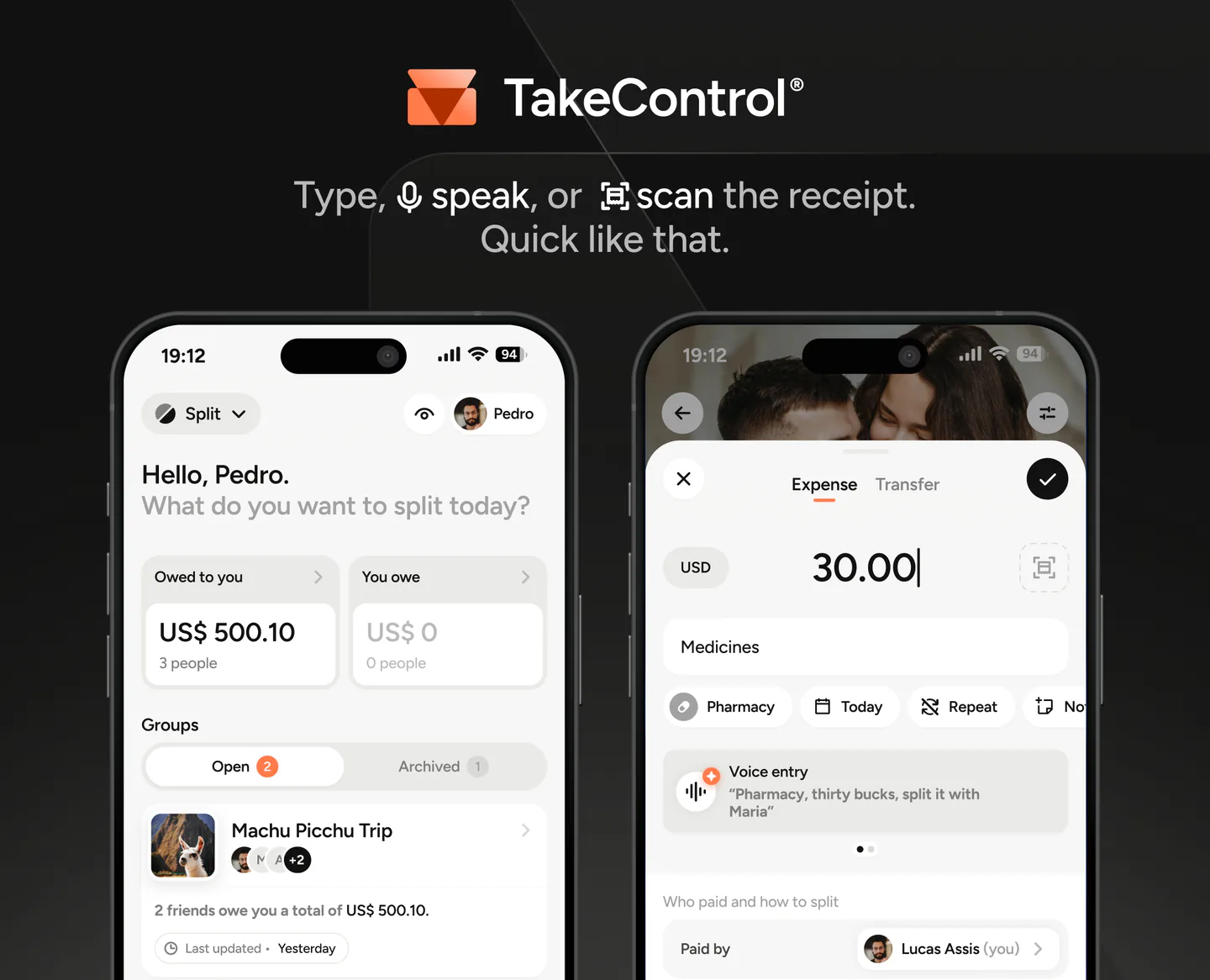
The most common mistake is waiting to settle everything “after the wedding.” By then, nobody remembers who covered the Uber for the bachelorette party or who fronted the shower decorations. Logging the expense right when it happens, with the exact amount and who paid, is what makes a fair split possible later. This is where an app like TakeControl helps: each person in the wedding party logs an expense the moment it happens, the group sees an updated balance, and by the end it is clear exactly who owes whom, without anyone trying to reconstruct months of spending from memory.
In larger groups, it is common for two or three people to naturally become the informal organizers, but that should not also make them responsible for remembering who paid for what. Centralizing every expense in one tool takes that burden off a single person’s shoulders and saves them from having to chase the rest of the wedding party over text. When everyone logs their own expenses directly, the history stays visible to the whole group, and nobody has to be the one playing bill collector.
4. Agree in advance on who covers the bachelor or bachelorette party
Tradition says the groomsmen cover the bachelor party and the bridesmaids cover the bachelorette. But tradition does not pay the bill. If the group is large, splitting the cost evenly is usually fairer than letting the two or three most enthusiastic organizers carry the financial weight alone.
That same logic applies to picking a destination. A beach weekend costs a lot more than one night out downtown, and not every groomsman can absorb that difference without resenting it later. Asking upfront what spending range feels comfortable for everyone keeps the decision from being made only by the two or three most excited people in the group, who sometimes forget that not everyone has the same room in their budget that particular month.
5. Speak up early if the budget does not work for you
If a bridesmaid or groomsman feels like the agreed-upon costs are too much, the time to say something is before the event is booked, not after the money is already spent. Proposing a scaled-back version of participation (going to the bachelorette weekend but skipping the shower, for example, or contributing less to the group gift) is a completely reasonable option. The golden rule here applies to everyone: nobody should go into debt for a role they were invited into out of friendship, not financial obligation.
The bottom line
Being part of a wedding party is one of the most meaningful roles a wedding can offer, but the financial side of it rarely gets the clear conversation it deserves. The difference between a group that comes out of it closer and one that ends up resentful over money almost always comes down to organization: agreeing on budgets ahead of time, keeping expense categories separate, and logging every contribution as it happens.
None of these five agreements require a complicated spreadsheet or a formal sit-down meeting. What they require is treating money conversations with the same ease the group already brings to picking a dress color or planning the bachelorette theme. The earlier that becomes part of the group’s normal rhythm, the less room there is for resentment to quietly build up. A shared expense app takes that mental math off everyone’s plate and leaves room for what actually matters, celebrating the couple.

I created TakeControl to make splitting expenses between couples and on trips simpler. Here, I share tips, app updates, lessons learned, and content to make managing shared expenses easier.
Frequently asked questions
There is no single amount: the total depends on the outfit, gift, travel, and events the group decides to plan. Before confirming a purchase or booking, list the expected costs and agree on a limit everyone can manage.
There is no hard rule here, it is a tradition where the groomsmen organize and split the cost among themselves to celebrate their friend. If money is tight, the honest move is to speak up early and suggest a simpler event instead of quietly going into debt for it.
Start by agreeing on a total budget for the event, then divide that number evenly among the bridesmaids who are organizing it, and be clear from the start about who covers decorations, food, drinks, and favors. Logging every expense as it happens keeps one person from quietly covering more than the others.
The best approach is for her to flag it to the group early and negotiate a lighter version of participation, for example attending the bachelorette party but skipping the shower, or contributing less to the group gift. Staying quiet about it usually causes more friction than a direct conversation about budget.
Yes, especially because wedding party costs stretch out over months between the shower, bachelor or bachelorette party, outfit, and gift. An app like TakeControl keeps every expense in one place and shows exactly how much each person has paid and what is still owed.
