















How to save for a trip as a couple without merging finances
Turn your trip into a monthly savings goal, choose equal or proportional contributions, and plan together while keeping personal accounts.

Saving for a trip together does not require depositing both paychecks into one account. It requires turning “we should go someday” into a plan with an amount, timeline, contribution rule, and review point.
The plan should follow payment dates, not just departure day. Flights may be due months before lodging, while meals and local transportation will be paid during the trip. A good timeline shows what each person needs to set aside without mixing travel money into everyday household spending.
Estimate the whole trip before splitting the target
Build a first estimate that includes:
- transportation to the destination, baggage, and airport or station transfers;
- lodging, taxes, fees, and deposits;
- insurance, documents, or connectivity where relevant;
- local transportation;
- food;
- activities both partners want;
- a margin for price changes and trip-specific surprises.
Keep personal shopping and solo activities outside the shared target. If one person wants an optional experience, it does not automatically become a couple expense.
Record when you checked each price and what it included: baggage, cancellation terms, taxes, and currency. A search result is not a guaranteed fare. The goal is a ceiling that both partners can afford without compromising rent, upcoming bills, or emergency savings.
Turn the total into a monthly goal
Start with this calculation:
joint monthly goal = (estimated cost − amount already saved) ÷ months available
Suppose the trip is estimated at $9,000. You already have $900 set aside and have nine months before the main payments. The remaining $8,100 creates a joint goal of $900 a month.
Then divide the plan into milestones:
- flights and lodging deposits;
- remaining booking balances;
- money needed at the destination;
- the final margin.
If $3,000 of airfare is due in three months, reaching the full target by departure is not enough. Milestones reveal early whether you need to change the dates, length, or destination instead of putting a late shortfall on a credit card.
Choose contributions both people can sustain
There is no universal fair split. Compare the room left after essential expenses and individual obligations.
| Method | How it works | When it can help |
|---|---|---|
| Equal | each partner saves the same amount | similar disposable income and priorities |
| Proportional | each takes an agreed percentage | meaningful differences in income or obligations |
| Affordable fixed amounts | each sets a sustainable contribution | variable income or uneven months |
| By category | one funds flights; the other lodging and part of the trip | different pay schedules or travel benefits |
With a $900 monthly target, a 60/40 split would be $540 and $360. The percentage does not have to mirror gross income automatically. Net income, necessary personal costs, and care responsibilities may be more useful inputs.
If no split produces an affordable contribution, do not pressure the person with less room. Reduce the cost or extend the timeline. A shared trip should not begin with one partner silently absorbing financial strain.
Save together without combining all household money
Three arrangements work well.
Personal accounts with one shared record
Each partner keeps their portion in a personal savings space and updates a shared tracker monthly. This preserves autonomy, but both people must distinguish a planned contribution from money actually set aside.
A dedicated joint travel pot
Both transfer contributions into one place used only for the trip. The total is easy to see, but check ownership, access, fees, and withdrawal rules. Do not choose a financial product solely for an advertised return; timing, risk, and access to the money matter too.
A hybrid system
A common balance covers shared bookings while each person keeps money for their own ticket or personal spending. This creates coordination without merging the rest of the couple’s finances.
If your broader system is still unclear, compare the options in joint vs. separate bank accounts for couples.
Keep emergency savings separate
Travel money has a purpose and a date. An emergency fund protects against necessary, unexpected events. Even if both balances appear in the same banking app, label and track them separately.
Do not count a credit limit as savings, and avoid planning to “borrow from the emergency fund and replace it later.” If the trip already depends on that withdrawal, the budget or timeline needs to change. The guide to a joint or separate emergency fund for couples can help you decide what must remain protected.
Agree now on what happens when circumstances change
Hold a short monthly review: current prices, amount saved, next due dates, and each partner’s available room.
If the cost rises, work in this order:
- remove or replace nonessential items;
- use only the price-change margin already planned;
- raise contributions only if both budgets allow it;
- change the date, length, or destination.
If one income drops, pause new bookings and protect housing, food, health, required debt payments, and emergency savings first. If one person contributes more, define whether it is a gift, a permanent change in the split, or an amount to repay. Do not leave it as an unspoken debt.
Download TakeControl when booking begins and keep a clear record of who advanced each travel cost.
Switch from a savings goal to actual expenses when you book
While you are accumulating money, the main record is the goal. Once flights, lodging, and tickets are purchased, you also need to know who paid and how each expense is split.
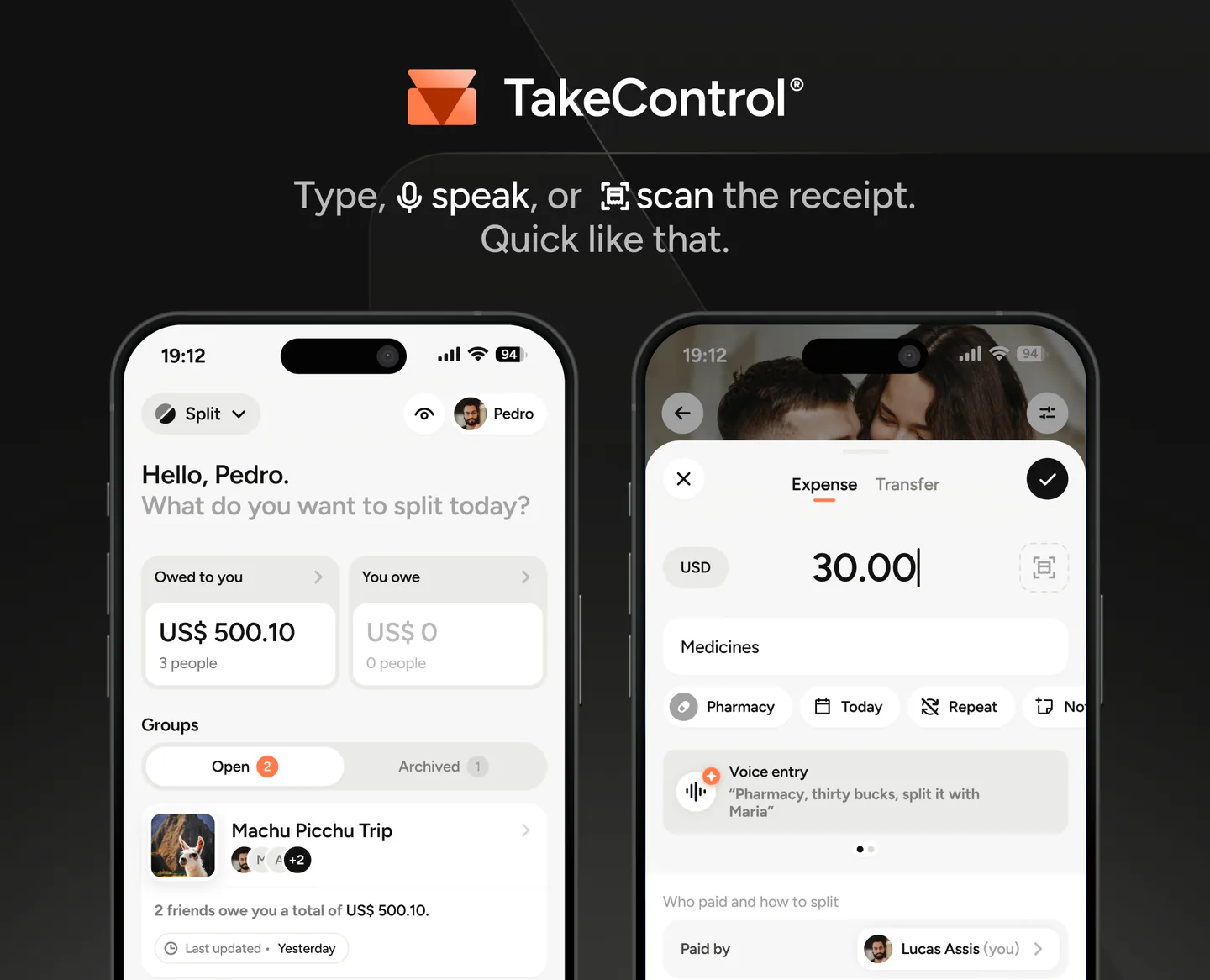
Create a trip group in TakeControl and add each real payment with its amount, currency, payer, and participants. This prevents the partner with a larger credit limit from appearing to have contributed more simply because they made the bookings. The app calculates the balance between you; it does not hold savings or transfer money.
Before purchasing, read how to split travel expenses as a couple. It covers points, upgrades, cancellations, and spending at the destination—the next stage after the savings plan.
A practical starting checklist
- choose a destination or cost range both partners accept;
- estimate every category and its payment date;
- subtract what is already saved;
- calculate the joint monthly goal;
- choose equal, proportional, affordable, or category-based contributions;
- keep emergency savings outside the travel target;
- decide where the money will stay and who can access it;
- review prices, balances, and income once a month;
- record paid bookings and refunds separately from future savings.
A good plan does not force a couple to merge every account. It creates enough visibility for both people to know what is funded, what remains personal, and how the dream will change if life changes.
Start the trip in TakeControl: create the group with the first booking and reach departure with every payment organized.
Product limitation: TakeControl records expenses and calculates balances between people. It is not a bank account, does not hold travel savings, and does not transfer money.
Sources and verification
Sources consulted on savings goals, managing money as a couple, and emergency savings:

I created TakeControl to make splitting expenses between couples and on trips simpler. Here, I share tips, app updates, lessons learned, and content to make managing shared expenses easier.
Frequently asked questions
Subtract the amount already saved from the estimated cost, then divide the remainder by the months before each payment is due. If $8,100 remains and you have nine months, the joint target is $900 a month. Apply your agreed split to that target.
No. Each partner can keep their share in a personal account and maintain a shared record. A dedicated joint account or hybrid system can also work. Check ownership, access, fees, and withdrawal rules with the financial institution.
Equal amounts are simple when both partners have similar room in their budgets. A proportional split may be more sustainable when income or personal obligations differ. You can also choose two affordable fixed amounts and adapt the trip to the total.
Generally, no. Travel is planned spending; emergency savings protect necessary, unexpected costs. If the trip only works by using that buffer, reduce the budget, move the date, or adjust contributions within safe limits.
TakeControl is not a bank account and does not hold savings. Once bookings begin, it can record who paid for flights, lodging, and other shared costs, who participates in each expense, and how the couple agreed to split it.
Pause new commitments, recalculate what is still needed, and protect essential bills and emergency savings first. Then reduce, postpone, or cancel refundable parts of the trip, or explicitly agree on a temporary change in contributions.
