















Long-distance relationship costs: how to split visits fairly
Build a visit fund, share transportation and hosting costs fairly, and keep one partner from carrying every long-distance relationship trip.

The fare jumps during the only weekend that works. The person traveling also pays to reach the airport or station, rearranges work, and spends hours in transit. The person hosting cleans, buys groceries, and covers more local plans than expected. If every visit is treated as a separate event, both partners can make a real effort while one still ends the year feeling that they financed the relationship.
Splitting long-distance relationship travel costs starts with a series of visits, not the most visible ticket. A workable rule fits both budgets and balances money, hosting, and the repeated effort of getting from one place to the other.
Calculate the full cost of seeing each other
Before choosing 50/50 or any other percentage, estimate what your preferred schedule actually costs. Depending on the route, include:
- flights, trains, buses, fuel, and tolls;
- transportation to and from each terminal;
- baggage, seat selection, and mandatory fees;
- lodging when neither home can accommodate a visit;
- groceries, meals, and local transportation;
- activities both partners choose;
- non-refundable changes or cancellations;
- mobile data or travel insurance for international visits.
Keep personal shopping, spontaneous gifts, and one-person upgrades outside the shared total. The guide to splitting expenses on a couple’s trip is useful for one vacation. This article focuses on making repeated travel sustainable.
Decide what each person can save before setting the frequency
Ask “what can we set aside each month?” before “how often do we want to meet?” The Financial Consumer Agency of Canada describes a budget as a plan that balances income, savings, and expenses and recommends making savings goals part of it. A visit fund can be one of those specific goals.
Use a six- or twelve-month horizon:
- choose a realistic number of visits;
- estimate the full cost of each one;
- add the visits together;
- subtract anything already saved;
- divide the remainder by the months before booking.
If that monthly amount requires carrying credit-card debt, missing bills, or abandoning an essential goal, the schedule is not affordable yet. Change the frequency, travel dates, transportation, or the spending plan at the destination.
Living apart also means maintaining two everyday lives. Neither partner should be expected to direct every discretionary dollar toward the relationship. Housing, health, family responsibilities, local friendships, and individual savings still matter.
Choose a rule that survives more than one visit
Four models cover most situations:
| Model | How it works | When it may fit | Main risk |
|---|---|---|---|
| Each traveler pays their trip | the visiting partner buys transportation | routes and visit counts are similar | breaks down when only one partner can travel |
| Traveler and host roles | traveler pays the fare; host covers agreed local costs | totals are reasonably close | groceries and outings may not offset an expensive fare |
| Shared visit fund | both contribute in advance and visits are paid from the fund | the couple wants one clear total | requires rules for contributions and eligible expenses |
| Income-based split | each contributes a percentage of shared costs | disposable incomes differ materially | the percentage must change when income changes |
A hybrid can be more practical: contribute 45/55 to a fare fund, let the host pay agreed groceries, and keep personal spending separate. Use the couples expense-splitting calculator to compare equal and income-based shares with your own numbers.
Write the rule in one sentence: “Through March, we will save $400 a month at 45/55; the fund covers intercity and ground transportation; the host covers groceries; restaurants go into the shared group.” A concrete sentence prevents each booking from reopening the entire negotiation.
Recognize the host’s costs without inventing rent
Hosting is not free. There may be extra groceries, a trip to collect someone, parking, laundry, or more meals and activities away from home. Those are real costs and can be tracked.
That does not require charging a prorated rent, pricing every shower, or invoicing household work. Agree on meaningful categories. Groceries bought for the visit may be shared; rent the host would pay anyway stays outside; a hotel that both partners need and approve can enter the joint budget.
Effort matters too. If Jordan is the only person who can travel because Sam provides care for a relative, Sam could share more of the fare or cover common destination costs. If alternating is possible, compare connections, departure times, time off, and reliability—not only miles.
Travel time does not need an hourly price. Use it to decide who makes the next trip, whether the schedule should change, and whether the financial split still feels balanced.
Example: funding six visits over a year
Maya and Alex plan six visits. Instead of relying on one current fare, they set a working ceiling for each meeting:
- round-trip intercity transportation: $600;
- ground transportation at both ends: $60;
- groceries and shared plans: $140.
The annual ceiling is $4,800, or $400 per month. Maya has 45% of the disposable income they chose to use for this calculation and Alex has 55%. Their monthly contributions are $180 and $220.
Whoever finds the suitable fare pays and records it in the group. Local transportation and shared food are added as they happen. If a visit costs less than $800, the remainder stays available for the next one. If a fare exceeds the ceiling, they decide before booking whether to use an earlier surplus, add a temporary contribution, or change the date.
These figures illustrate the method, not a normal fare for any route. Use your actual cities, currencies, available income, and travel frequency.
Agree on high fares, cancellations, and income changes
Set an amount above which neither partner books without confirming. Also decide:
- whether miles or points are a contribution, a gift, or simply a payment method;
- who pays for a change made for one person’s preference;
- how a refund reduces the original expense or returns to the fund;
- how you handle a cancellation that affects both partners;
- when a job or income change triggers a new contribution ratio.
For international visits, preserve the original amount and currency and avoid converting the same expense twice. The multiple-currency travel expense guide explains that workflow in more detail.
Do not use the budget as a test of commitment. If a person cannot maintain the preferred schedule without debt, temporarily reducing visits is a financial decision, not a measure of love.
Review the cycle, not every coffee
After two or three visits, compare the plan with reality:
- how many times each partner traveled;
- what each person contributed and advanced;
- which hosting costs stayed invisible;
- whether travel time fell mainly on one person;
- whether the next cycle still fits both budgets.
You do not need to settle after every meal. Record shared costs, let offsets accumulate, and transfer money when the balance is meaningful. Then adjust the rule for future visits without rewriting an agreement after the fact.
A fair system will not remove the distance. It will keep the work of crossing it visible and prevent the same wallet from carrying every reunion. Download TakeControl, create a visits group, and let the next trip begin with a plan instead of an overdue conversation.
Sources and verification
- Making a budget — Financial Consumer Agency of Canada (Accessed on )
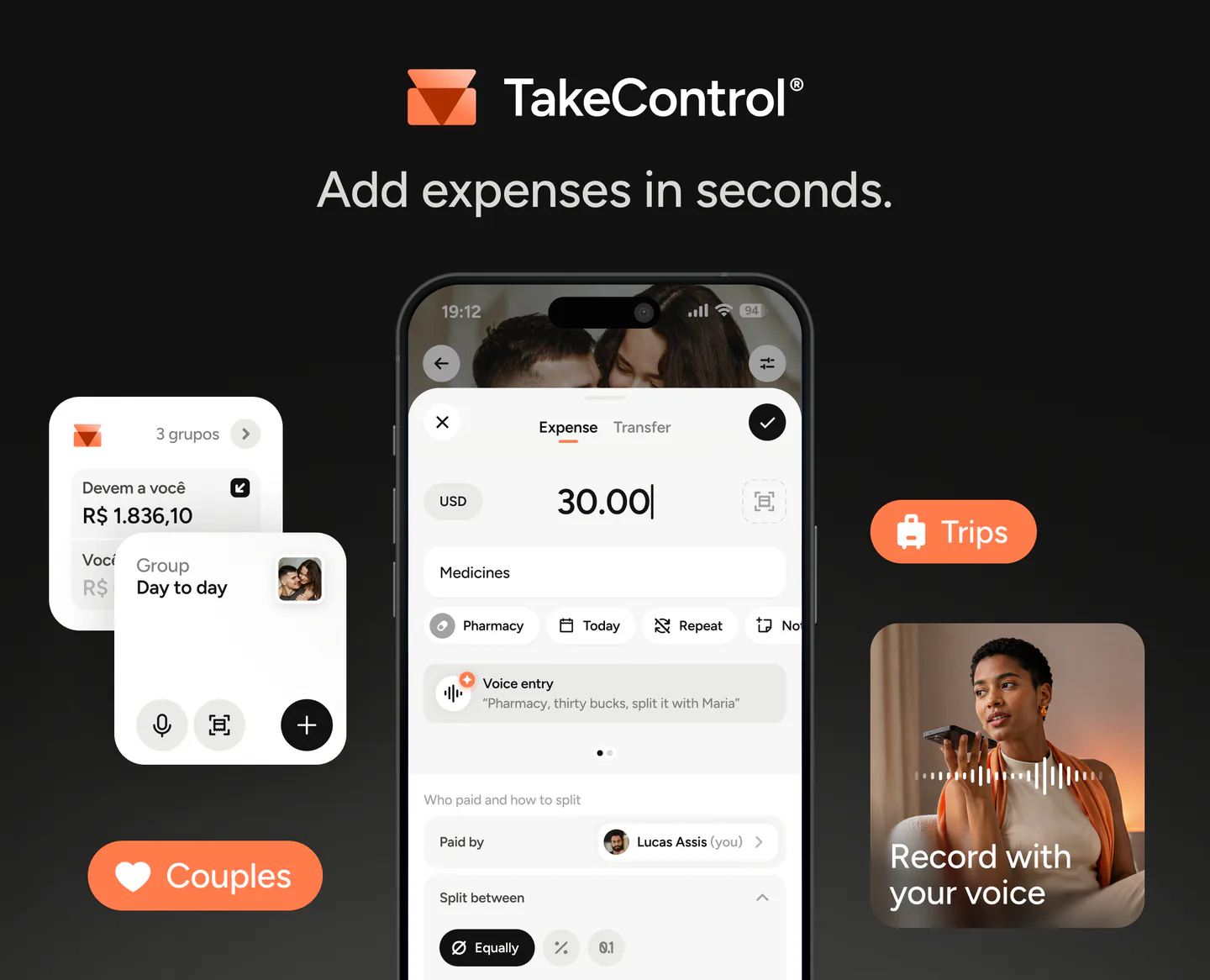

I created TakeControl to make splitting expenses between couples and on trips simpler. Here, I share tips, app updates, lessons learned, and content to make managing shared expenses easier.
Frequently asked questions
There is no universal rule. A couple can split each fare, alternate visits, contribute according to income, or use a shared visit fund. Include who travels more often and agree before booking rather than assuming the passenger must pay the entire cost.
It can be fair when the totals and visit frequency are reasonably balanced. Estimate the fare, local transportation, groceries, and shared plans first. If one role remains much more expensive or demanding, add a contribution or choose another split.
Estimate the visits you can afford over the next six or twelve months, add transportation and shared costs, and divide the total by the months available. Then decide each partner’s contribution and review it when fares, income, or frequency change.
Usually not. Connections, time off, and fatigue belong in the fairness conversation, but an hourly charge creates false precision. A couple can recognize the effort by alternating routes, paying more of the destination costs, or changing visit frequency.
Treat transportation as a cost of seeing each other, not automatically as that traveler’s personal bill. The other partner may share the fare, cover agreed costs at the destination, or contribute more to the visit fund according to both budgets.
Create a group for visits, record who paid and who participated in each expense, and apply the agreed split. The balance offsets advances. TakeControl organizes the numbers but does not book tickets, hold savings, or transfer money.
