















International group trip: how to split expenses in multiple currencies
Choose a base currency, track cards and cash, handle exchange rates and settle a group trip without converting the same cost twice.

One friend booked the hotel in euros months ago. Another bought train tickets in pounds. At the destination, groceries were paid partly in cash and partly on the card with the better exchange terms. Dividing by four sounds easy — until everyone uses a different converter and gets a different answer.
The problem is not the number of currencies. It is mixing up the original price, the rate used and the payer’s actual cost. A shared method keeps the numbers reviewable without turning every coffee into a foreign-exchange exercise.
This guide focuses on the currency layer. For budgets, lodging and group expectations, start with the group trip planning guide.
Choose a base currency before the first payment
The base currency is the unit used to display and settle the group’s net balance. It does not have to be the currency used for every purchase. A group can settle in US or Canadian dollars while recording a hotel in euros, transport in pounds and food in yen.
A practical base currency is one that most participants:
- use for income and bank transfers;
- understand without constant mental conversion;
- expect to use for the final settlement.
If people live in different countries, choose the option that removes the most conversions. Keeping separate balances per currency can also work, but only when everyone can conveniently hold or transfer those currencies.
Write the rule in the group chat: “Our balance and settlement will be in CAD; every expense stays recorded in the currency paid.” Clear wording matters more than the particular currency.
Record the amount in the currency actually paid
Do not turn €86 into dollars before logging it and then convert the group total again. Save the transaction facts first:
- original amount and currency;
- payment date;
- payer;
- participants;
- payment method;
- any known fee or rate.
The entry can then be checked against a receipt or statement. It also prevents double conversion, such as changing Czech koruna into euros and then euros into dollars when a direct conversion is available.
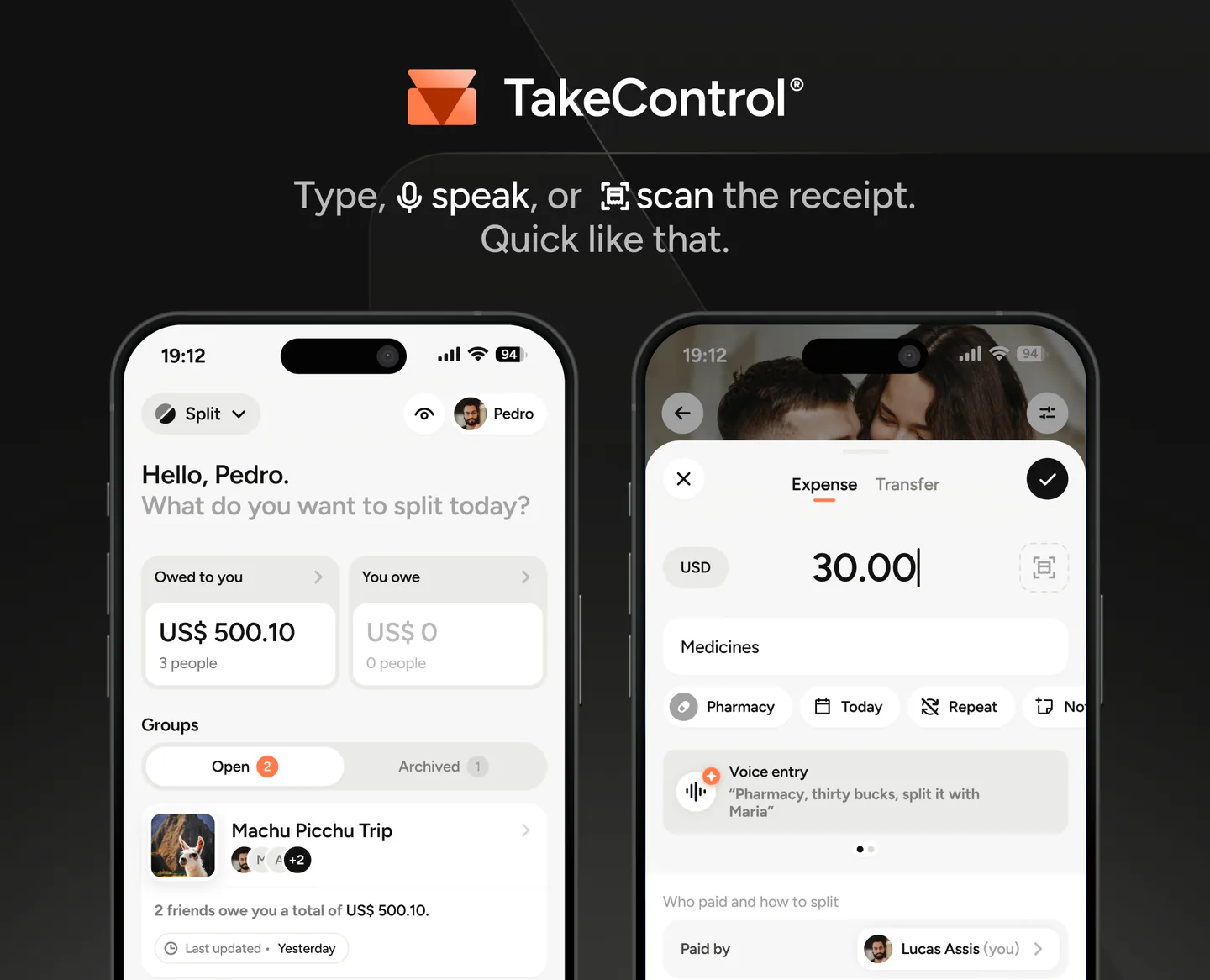
TakeControl stores each expense in the currency used and supports 75 currencies. With TakeControl PRO, a group can display automatically converted balances and set custom exchange rates without replacing the original value.
Match the exchange-rate rule to the payment method
There is no single universal “daily rate.” A market reference, a cash exchange counter and a card’s final posted amount can all differ. The European Central Bank’s reference rates are explicitly informational, while a card network’s or bank’s settled amount reflects the transaction that actually happened.
Use a consistent rule:
| Payment method | Best value to split | When to update it |
|---|---|---|
| Card | final posted amount, including costs tied directly to the purchase | when the pending charge settles |
| Cash bought before departure | effective cost of buying the currency | if the receipt shows a different rate or fee |
| ATM withdrawal | debited amount plus fees attributable to that withdrawal | after the debit is final |
| Prepaid booking | effective rate on the payment date | only after a refund or additional charge |
| Actual cost unavailable | agreed reference rate for the expense date | once the real cost appears |
Consistency is the fairness rule. Do not value the payer’s card purchase at one rate and choose a better later rate when calculating what everyone else owes.
Separate currency exchange, fees and consumption
Buying foreign cash is not itself a travel expense; money has changed form, but it has not yet been consumed. If Maya exchanges $400 and later pays for a shared meal with some of it, record the meal, not the entire $400 exchange.
For fees, draw a simple boundary:
- a fee caused by a shared purchase can follow the same split;
- an annual card or account fee belongs to the account holder;
- an ATM fee may be shared only by the people who received or used that cash;
- tips and service charges follow the participants in that bill, not automatically the whole trip.
This distinction is even more important when travelers have different spending limits. The guide to traveling with friends on different budgets helps decide participation before currency enters the discussion.
Example: four travelers, three currencies
Imagine four friends paying in euros and pounds, then settling in Canadian dollars:
- Noah pays the hotel in euros by card. The entry keeps the euro amount, date, payer and four participants.
- Priya buys rail tickets in pounds. The charge stays in pounds until its final home-currency value appears.
- Mateo withdraws cash for groceries. The groceries are entered in local currency; the ATM fee is shared only if that cash served the group.
- Claire receives a partial hotel refund. The refund is entered in euros against the same four participants.
An automatic conversion gives the group a useful live estimate. Before settling, they review pending charges and replace estimates with effective costs where needed. They do not recalculate the hotel using the last day’s rate: that payment belongs to the date and method that actually occurred.
Settle once and avoid a third currency
Review large expenses, refunds and fees before anyone sends money. Then freeze the chosen rates and calculate each person’s net balance in the base currency. If someone will pay in another currency, convert directly from the balance currency to the transfer currency instead of using euros or US dollars as an unnecessary bridge.
Net the group’s balances instead of reimbursing every purchase separately. TakeControl’s debt simplification can reduce the number of payments required.
If the connection disappears on a train or in an airport, keep logging. TakeControl works offline and syncs later; the travel and currency FAQ explains which features are free and which are included in PRO.
Group checklist
Before departure:
- pick a base and settlement currency;
- decide when to use effective cost and when to use a reference rate;
- assign fees and rounding differences;
- define how to handle cash, withdrawals and refunds;
- log each expense when it happens, even offline;
- review pending entries before the final transfer.
For trips crossing several countries with unreliable service, the group backpacking guide adds practical budgeting and offline habits.
Multiple currencies do not need to create multiple versions of the truth. Download TakeControl, create the trip group and keep every original amount intact until settlement.

I created TakeControl to make splitting expenses between couples and on trips simpler. Here, I share tips, app updates, lessons learned, and content to make managing shared expenses easier.
Frequently asked questions
Choose a base currency that most people can understand and use for the final payment. Keep each expense in its original currency, then use the base currency only to view and settle the net balance.
For a card payment, the final posted amount usually reflects the payer’s real cost best. If it is still pending, use a temporary rate and update it later. For cash, use the effective cost of buying or withdrawing that currency.
A fee caused directly by a shared purchase can follow that purchase’s split. A personal account or card fee normally stays with the cardholder. Agree on that boundary before the trip.
Enter the refund in the original expense currency and apply it to the same participants. If the payer receives a different home-currency amount because rates moved, handle the difference under the group’s agreed fee and exchange-rate rule.
It can be, if everyone holds and transfers the same currencies. Otherwise, one base currency is simpler. Do not revalue old expenses at a new rate or route a direct conversion through a third currency.
Yes. TakeControl supports 75 currencies and preserves the original currency of every expense. Automatic balance conversion and custom group exchange rates are TakeControl PRO features.
