















Baby on the way: how couples can reorganize their finances before birth
A practical plan for couples to review income, separate baby costs, and agree on a fair split before their routine changes.

A new baby changes two parts of a household budget at once: new expenses begin, and income may shift just as daily life becomes less predictable. If the money conversation waits until after the birth, every diaper run, appointment, or urgent purchase can become a negotiation at the worst possible time.
Financial preparation does not mean predicting what a child will cost through college. It means agreeing, before the transition, on how much money will be available, what belongs to the family budget, and how each partner will contribute.
This guide is about that transition. If you first need to compare broader ways of sharing money, start with our complete guide to splitting expenses as a couple or try different percentages in the couples expense-splitting calculator.
Start with the income you will actually have
Before making a list of strollers and cribs, build a month-by-month income timeline. For each partner, record:
- normal take-home pay;
- expected start and end dates for leave;
- estimated take-home income during each stage;
- benefits or employer payments that are already confirmed;
- likely payment dates;
- work-related costs that may fall and new costs that may appear.
Do not build the plan around the most optimistic case. If income varies or a payment is not confirmed, create a conservative version of the month. Parental leave and benefit rules vary widely by employer, state, province, and country, so confirm the details with the official sources that apply to you.
If one partner’s income already changes month to month, our guide to splitting couple expenses with variable income explains how to choose a baseline that does not depend on a particularly good month.
Separate setup purchases from recurring costs
A long registry can make the first total look alarming, but it is not your monthly baby budget. Meanwhile, modest purchases that repeat can take up more room than expected. Keep two different lists from the start.
| Type of cost | Examples | Practical decision |
|---|---|---|
| Before-birth setup | crib, car seat, stroller, feeding supplies, room adjustments | set a priority, spending cap, and purchase date |
| Recurring from the beginning | diapers, hygiene supplies, clothes as the baby grows | create a monthly category and adjust it with real use |
| Variable or occasional | prescribed medicine, appointments, replacements, transportation | leave room in the month and record it when it happens |
| Later with an approximate date | daycare, in-home care, return-to-work costs | research early and keep a separate estimate |
Mark every initial item as needed before birth, safe to wait, or buy only if the need appears. That simple filter reduces anxiety-driven purchases and protects cash for needs you cannot know in advance.
Avoid stocking multiple sizes, feeding products, or medicine just because they appear on a generic checklist. Growth, preferences, and health needs differ. Budget for the category, then buy for your actual baby and follow professional guidance when health is involved.
Pick a rule for each group of expenses
Having a child does not require merging every bank account, and it does not make a 50/50 split automatically fair or unfair. Four structures are common:
- Equal split: straightforward when income and personal breathing room are similar.
- Income-based split: each partner covers a share based on available household income.
- Fixed contributions: both partners transfer an agreed amount into the shared budget.
- Different rules by category: the household, baby, and personal spending each follow their own split.
The fourth option is helpful when a couple wants to keep the household arrangement that already works while creating a separate rule for the child. The card used at checkout does not decide whose cost it is: a pharmacy purchase paid by one partner can still be a shared baby expense.
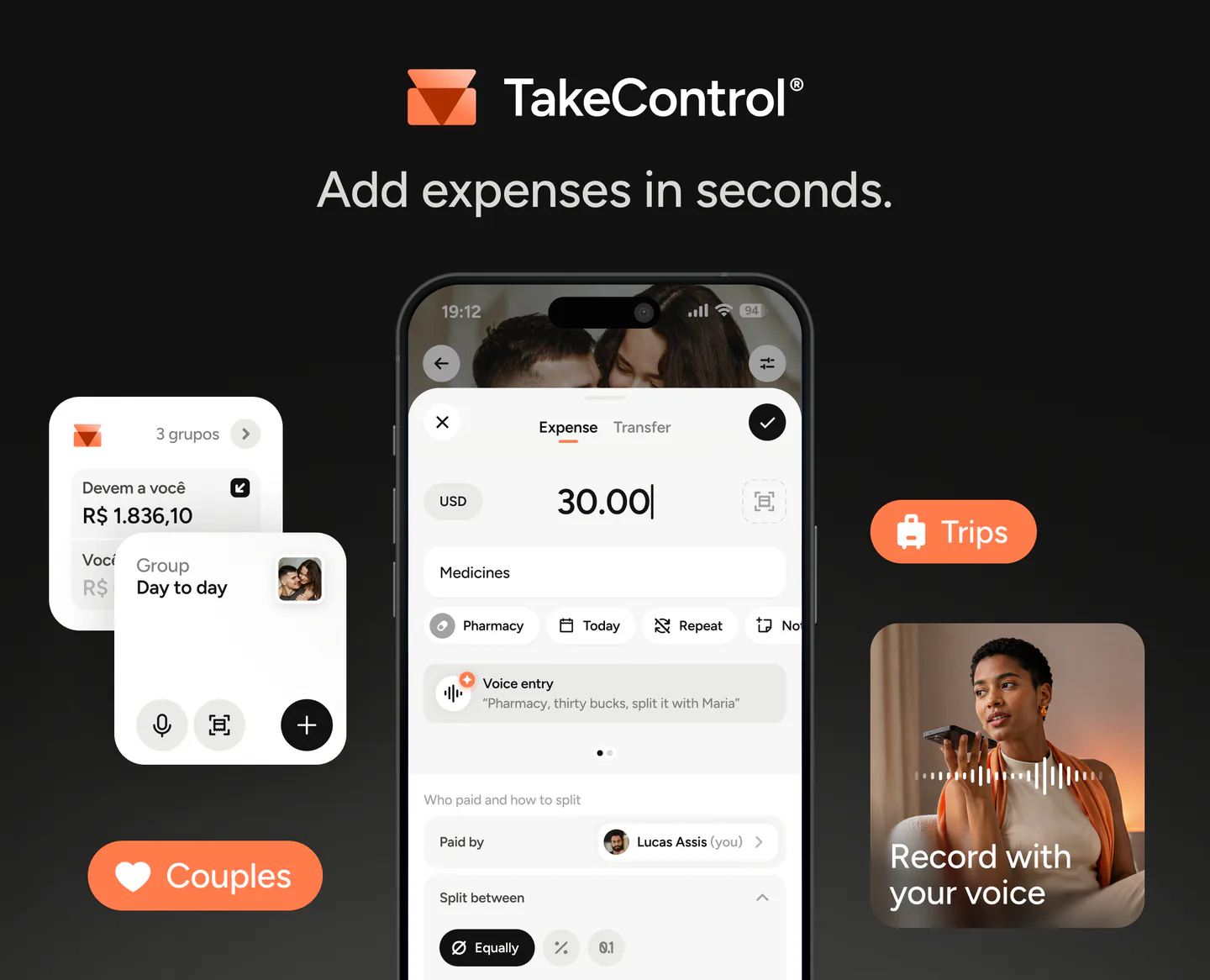
TakeControl lets you create separate groups, record who paid, and split each expense equally, by percentage, or by exact amount. Download TakeControl and test your household and baby rules before the new routine begins.
Run a trial month before the birth
If you can, rehearse the new budget during pregnancy. Live on the income you expect during leave and move the difference between current and future income into savings. At the same time, add your estimate for recurring baby expenses.
The trial answers questions a theoretical spreadsheet can hide:
- can you get through the month without relying on a credit limit?
- does one partner lose much more personal flexibility under the new split?
- which subscriptions or optional purchases need to pause?
- do bill due dates fit the new pay schedule?
- what remains for surprises without counting on overtime or a bonus?
If the numbers do not work, adjust before the birth: reduce the setup list, delay nonessential purchases, revisit the percentages, or extend the savings period. The purpose is not to prove the first plan was right. It is to find the weak point while you still have time to change it.
Give each savings bucket a job
“Saving for the baby” is too vague to guide a decision. Separate at least three goals:
- before-birth purchases, with a list and a cap;
- the income gap during leave, calculated month by month;
- the family’s emergency fund, which should not be drained by predictable purchases.
The right amount depends on job stability, support network, health coverage, and local costs. Rather than copying a universal number, use the emergency fund calculator as a starting point and decide which essential bills your reserve would need to cover.
Also make sure both partners know where the reserve is and can access it when appropriate. Emergency money that only one person understands creates a fragile system.
Build a routine that works when you are tired
After the birth, the system needs to work with limited time and interrupted sleep. Set up:
- one group or list for the child’s expenses;
- simple categories such as hygiene, health, clothing, and childcare;
- a default split, with exceptions recorded when they happen;
- recurring household bills prepared in advance;
- a ten-minute weekly check-in during the first month;
- a broader review after the first complete month.
Do not use the record to police small choices. It should answer “What are we spending, and how are we sharing it?” — not turn a late-night diaper purchase into a performance review.
The TakeControl FAQ explains the available split methods and recurring expenses. You can also use our guide to managing recurring household expenses as a couple to settle rent, utilities, and subscriptions before the new routine starts.
Let the agreement change with your family
A pregnancy budget is an informed forecast. After the birth, you will learn the real pace of diaper use, how quickly clothes are outgrown, what health care looks like, how returning to work changes the week, and what childcare actually requires. Updating the rule is not a failure to plan; it is planning with better information.
With income mapped, expenses separated by type, clear sharing rules, and review dates already scheduled, you will not have to make every financial decision during the most exhausting weeks. Start the system before the baby arrives, then adapt it to the family you actually become.

I created TakeControl to make splitting expenses between couples and on trips simpler. Here, I share tips, app updates, lessons learned, and content to make managing shared expenses easier.
Frequently asked questions
Start with expected take-home income after the birth. Then separate setup purchases from recurring costs, decide which expenses are shared, choose a split for each category, and test the new budget before the baby arrives.
Include necessary gear and initial supplies, plus recurring costs such as diapers, feeding when applicable, prescribed medicine, clothing, health care, and childcare. Actual amounts depend on where you live and how your family will operate.
Not necessarily. An equal split can work when incomes and available spending room are similar. An income-based split, fixed contributions, or a separate percentage for baby costs may be more sustainable. The rule should be explicit and open to review.
Estimate what each partner will actually receive in every month of leave and when it will arrive. Build a conservative scenario for a delay or income drop, and confirm benefits and deadlines with official sources where you live.
It can be. A separate group keeps diapers, clothing, health, and childcare visible instead of mixing them into rent and groceries. The couple can give that group its own split and learn what the category really costs.
Review it after the first full month and whenever income, leave, feeding, health needs, or childcare changes. Early on, a short weekly check-in helps correct estimates without turning every purchase into a negotiation.
