















Road trip with friends: how to split gas, tolls, and parking
A practical way to split gas, tolls, parking, and car costs on a road trip, including different passengers, routes, and rental cars.
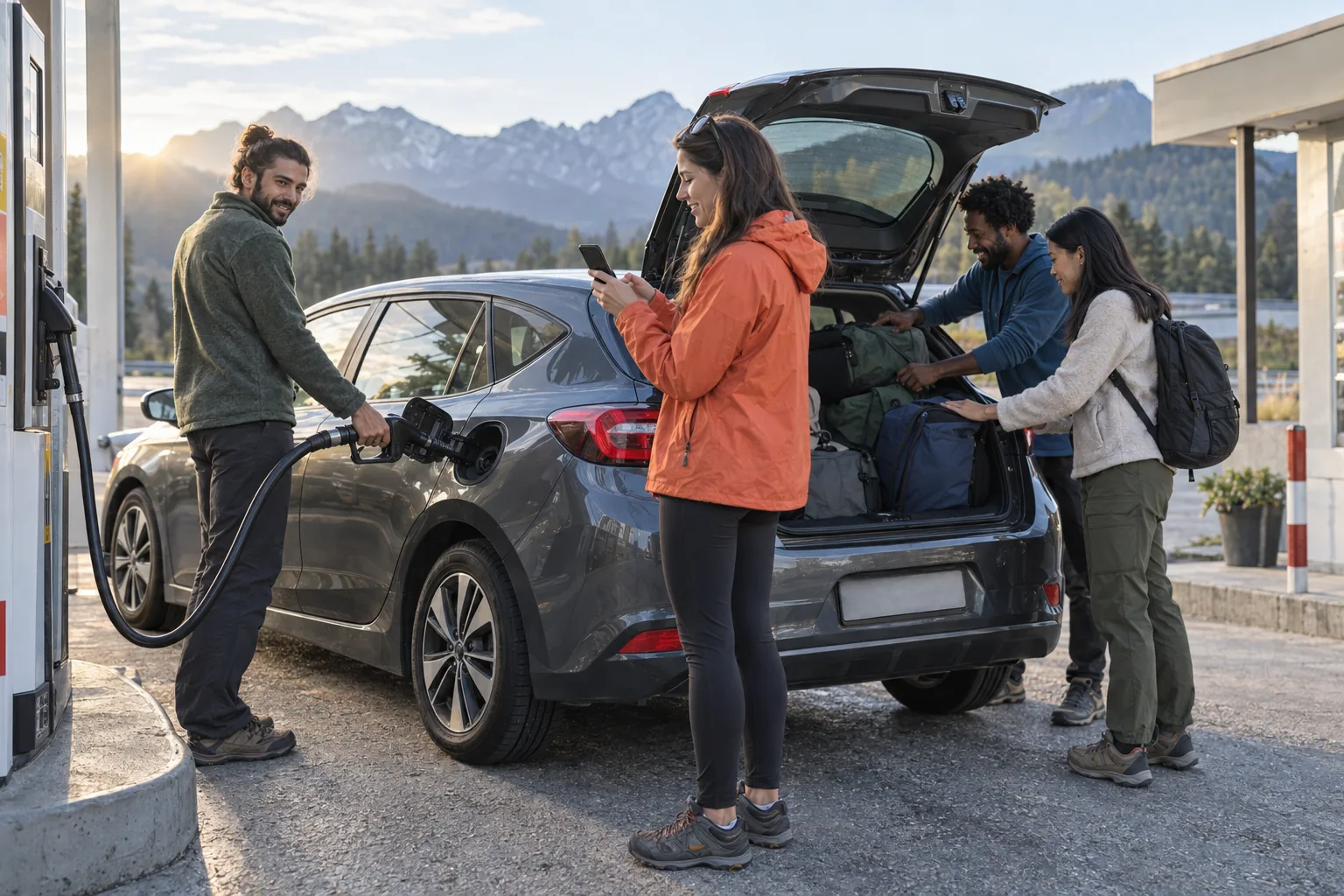
One person paid for the first fill-up. The toll went to the car owner’s transponder. Someone else covered a parking garage, and nobody wrote down the detour to pick up the fourth traveler. Splitting everything four ways sounds easy—until one friend points out that they rode for only half the route.
A fair road trip split has two parts: what the car actually cost on the shared route and who benefited from each leg. Agree on those rules before departure, then record payments as they happen.
This guide is for weekend drives, longer road trips, and vacations in a personal or rental car. A recurring commute needs a different routine; see the guide to splitting gas for a work carpool for that monthly use case.
Decide what belongs in the car budget
Not every car-related cost automatically belongs to the whole group. Sort expenses before you leave:
| Category | Examples | Practical rule |
|---|---|---|
| Shared | fuel or charging for the agreed route, tolls, group parking | split among riders on that leg |
| Needs agreement | personal-car wear, unusual cleaning, rental price, additional driver | set the amount and participants first |
| Individual | personal detour, solo-activity parking, snacks at a stop | paid by the person who chose or used it |
A traffic or parking ticket does not become a group expense merely because it happened during the vacation. Nor should maintenance that was already due appear unexpectedly in the final balance. If an exceptional cost has no obvious owner, review it separately with the rental agreement, receipts, and context.
Food, lodging, and attractions may stay in the same trip group, but keep them in separate categories. That makes the transportation total visible and prevents a personal stop from being blended into the car cost.
Calculate fuel from the route, not a guess
You can estimate fuel before leaving with either unit system:
US/Canada example: gallons = miles ÷ miles per gallon
Metric example: liters = kilometers × liters per 100 km ÷ 100
Suppose four friends will drive 540 miles in a car that averages 30 mpg. At an illustrative $3.60 per gallon, gas is about $64.80. Add $42 in tolls and $36 in shared parking, and the car total is $142.80, or $35.70 each when all four ride the full route.
For a more accurate result, start with a full tank and refill to the same level when the shared drive ends. The second fill-up better reflects traffic, hills, weather, cargo, and actual driving. If the trip begins or ends with a partly used tank, record the gauge and agree on a reasonable cutoff rather than treating a full refill as shared by default.
Use an estimate for planning and the confirmed amount for settling. A fuel buffer in the budget is sensible; charging friends for fuel that was never used is not.
Make the car-owner decision explicit
Fuel is not the full cost of driving. Mileage also affects tires, maintenance, and resale value. That does not mean every group of friends needs a depreciation formula. It means the owner’s contribution should not be left unspoken.
Three approaches are easy to explain:
- Split direct costs equally. Everyone, including the driver, shares gas, tolls, and parking; the owner absorbs wear.
- Passengers cover more direct costs. The driver pays a smaller fuel share, or none, as a simple acknowledgment of providing the car and driving.
- Agree on a mileage amount. The group chooses a per-mile or per-kilometer amount that covers vehicle use. Do not then add the same fuel again unless the agreement clearly says the mileage amount excludes it.
None is automatically the fairest. Distance, who proposed the trip, whether cars rotate, and the owner’s comfort all matter. Put the decision in the group chat before anyone turns the key.
Split by leg when the passenger list changes
Dividing the full total by the largest group size works only when everyone travels the same route. If someone joins later, flies home, or spends a day elsewhere, create separate legs.
For example, assign the outbound gas and tolls to the four people in the car, then assign the return drive to the three who came back in it. A hotel parking charge used throughout the stay may still belong to all four because the car supported the shared trip.
You do not need to price every mile. Start a new leg only when the passenger list or the purpose of the drive meaningfully changes. The same method works with two cars: each expense includes the people in that vehicle at that time.
If budget differences are shaping the route as much as mileage, use the guide to traveling with friends on different budgets alongside this method.
Treat a rental car as its own category
Break a rental into four parts:
- base price and required charges;
- protection and add-ons the group selected;
- fuel or charging;
- tolls and parking.
A refundable security deposit is not an expense while it is returned in full. Record only a charge that actually posts. An optional upgrade requested by one person should not quietly become everyone’s cost either.
If friends will rotate driving, check who is authorized and whether the rental company charges for additional drivers. Decide that at booking or pickup, not after hundreds of miles.
Keep shared driving separate from personal detours
A detour to collect someone who is part of the trip can be shared if everyone accepts it. A special shopping stop, an outing for only two travelers, or parking for a solo activity belongs to the people involved.
Apply the same test to parking:
- hotel parking for the group car: shared;
- parking for an optional excursion: split among participants;
- an extra space requested for one person’s convenience: individual.
Asking who benefited is more useful than declaring that “parking is always shared” or “parking is always personal.”
Log now and transfer once
Avoid making one person finance the entire drive. Rotate larger payments when practical, but log the amount, payer, and participants every time.
Electronic tolls and parking charges can post later. Mark them as pending and settle only when they are confirmed. On an international route, keep the original currency too; the guide to splitting travel expenses in multiple currencies explains how to avoid converting the same cost twice.
There is no need to send money at every gas station. Watch the running balance so one person does not get too far ahead, then make only the transfers needed to bring everyone to zero.
A pre-trip checklist for the group chat
Before leaving, answer these questions together:
- Which car costs are shared?
- Does the driver pay the same share?
- Is there compensation for a personal car?
- How will different route legs be handled?
- Who pays for personal detours and optional stops?
- When will late toll and parking charges be checked?
- When is the balance final?
The whole agreement can fit in one pinned message. For lodging, groceries, restaurants, and activities, pair it with the broader group trip expense guide.
A fair split starts before the first toll
A road trip is not one bill. It is a chain of fill-ups, tolls, parking charges, and route legs with changing passengers. Adding everything at the end without context is what turns simple arithmetic into an argument.
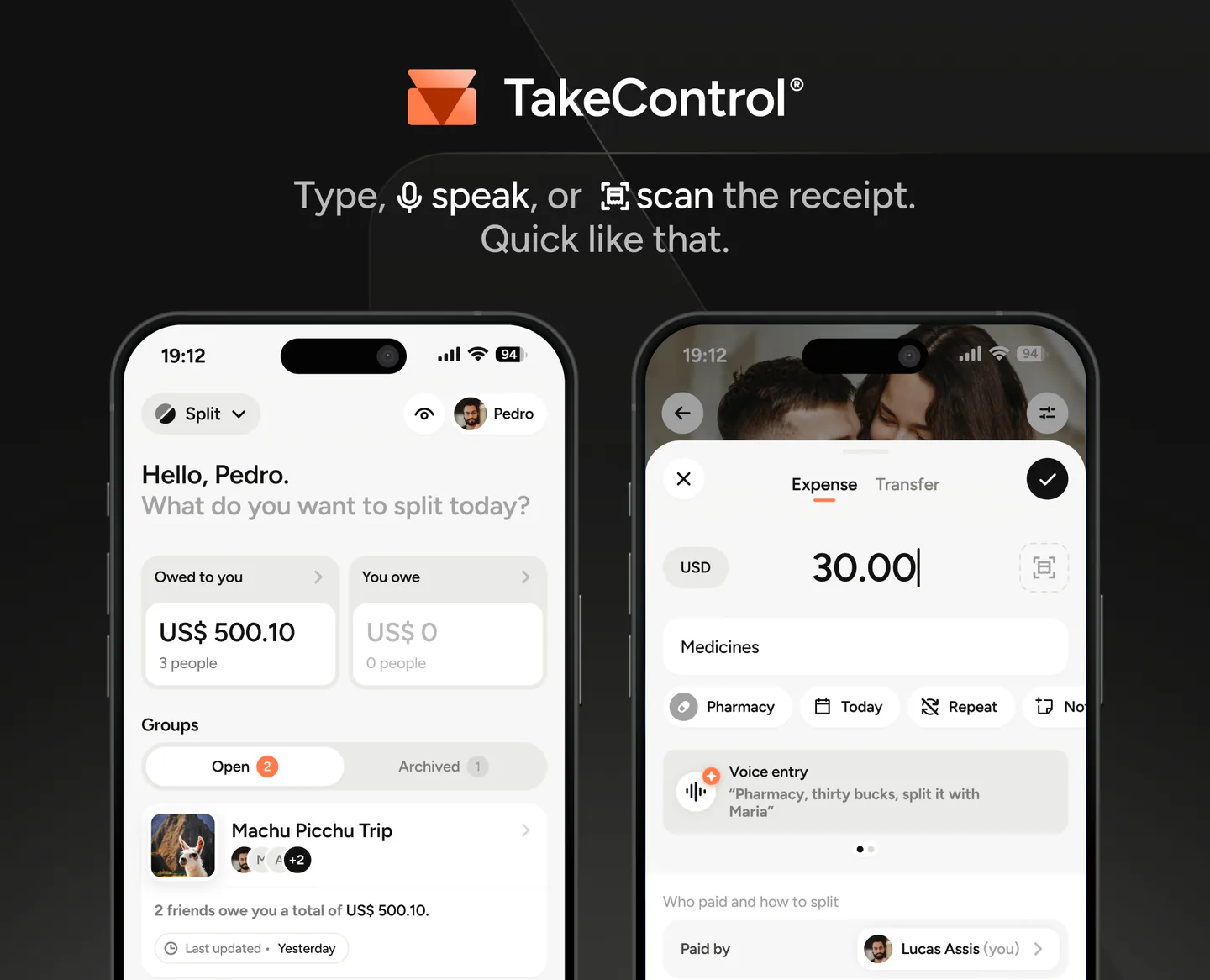
Choose the rule, use actual fuel data, assign each leg to its riders, and let the balance do the rest. Create the road trip group in TakeControl before departure so the last mile ends with memories—not an investigation into who paid what.

I created TakeControl to make splitting expenses between couples and on trips simpler. Here, I share tips, app updates, lessons learned, and content to make managing shared expenses easier.
Frequently asked questions
Gas or charging, tolls, and parking for the shared route are the usual starting point. Rental charges, additional-driver fees, and compensation for using a personal car should be included only after the group agrees on them.
In miles, divide the distance by the car’s miles per gallon and multiply by the average price per gallon. In metric units, multiply distance by liters per 100 kilometers, divide by 100, and multiply by the price per liter. A full-tank-to-full-tank check can show the actual fuel used.
For a trip everyone chose together, including the driver is the simplest default. Friends may instead reduce or waive the driver’s share to recognize use of the car and time behind the wheel, but that choice should be made before the trip.
Wear is real, but there is no single social rule. The owner may absorb it, the group may use an agreed mileage amount, or the passengers may cover more of the direct costs. Pick one method in advance and do not add a surprise fee afterward.
Break the route into legs and assign gas, tolls, and parking to the people present on each leg. Someone who joins only for the return does not pay for the outbound drive, while a personal detour belongs to the person who requested it.
Track each vehicle and its passengers by leg. The group can settle the cars separately or pool both totals if everyone agrees, but the method should not quietly make someone who rode fewer miles subsidize the other vehicle.
